How Mozart Matches Character to Voice
Mozart’s Le nozze di Figaro is a fast-paced, funny, and emotionally diverse opera, and one of the things that makes it so effective is how Mozart uses voice types to help define each character. The sound of each role tells us something about who that person is, what they’re feeling, and how they relate to others. Below, you can take a closer look at the five main characters, their vocal ranges, Fach classifications, and what their music reveals about them.
What is Fach?
Fach is a German term used in opera to classify singers according to their vocal range, weight, color, and agility, expanding upon the basic voice types of soprano, alto, tenor, and bass. It helps composers and directors match singers to roles that best suit their voices, ensuring that the character’s personality comes through naturally. Understanding Fach gives us insight into why Mozart chose specific voice types for each character in Le nozze di Figaro.
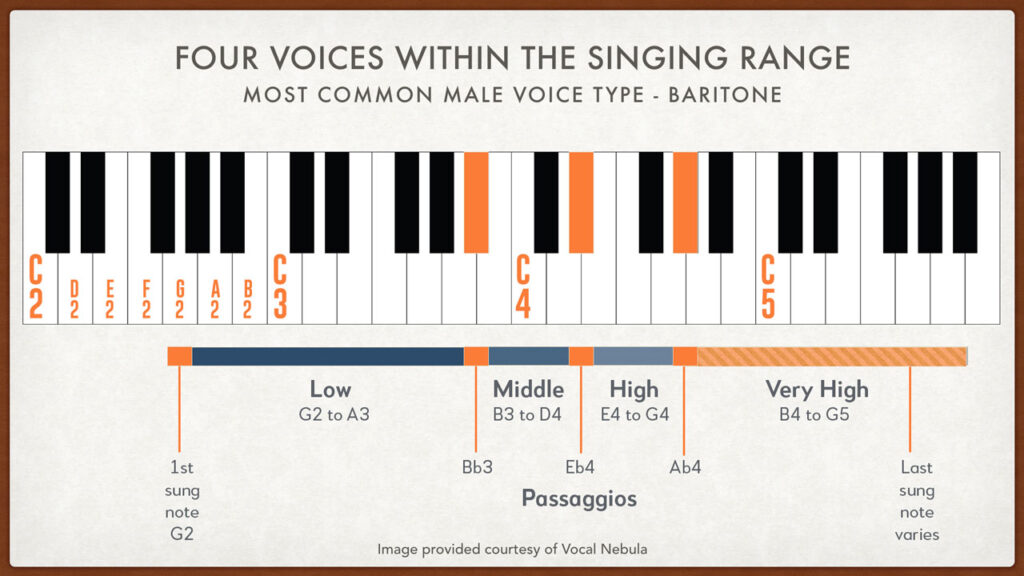
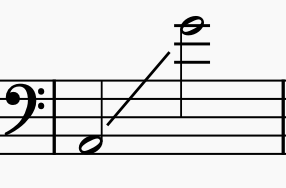
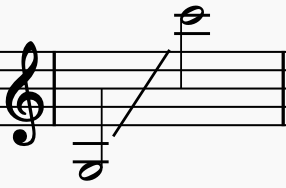
vocal range of typical baritone – Vocal Nebula
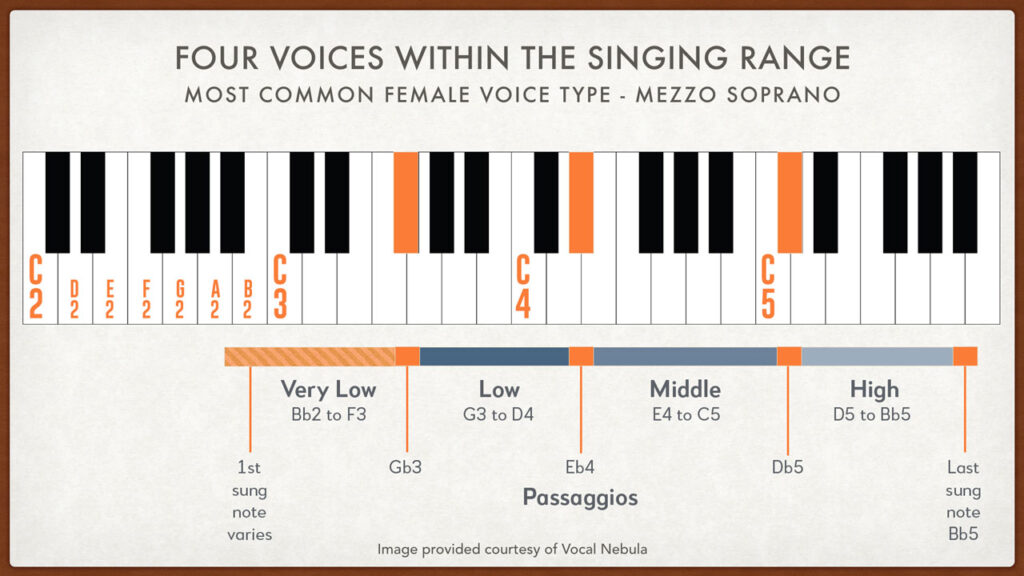
vocal range of typical mezzo soprano – Vocal Nebula
FIGARO
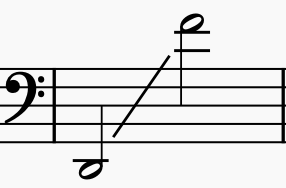
Voice Type: Bass
Range: D2 – F4
Fach: Bass-baritone
Key Arias: “Se vuol ballare” (If you want to dance), “Aprite un po’ quegli occhi (Open your eyes a little)
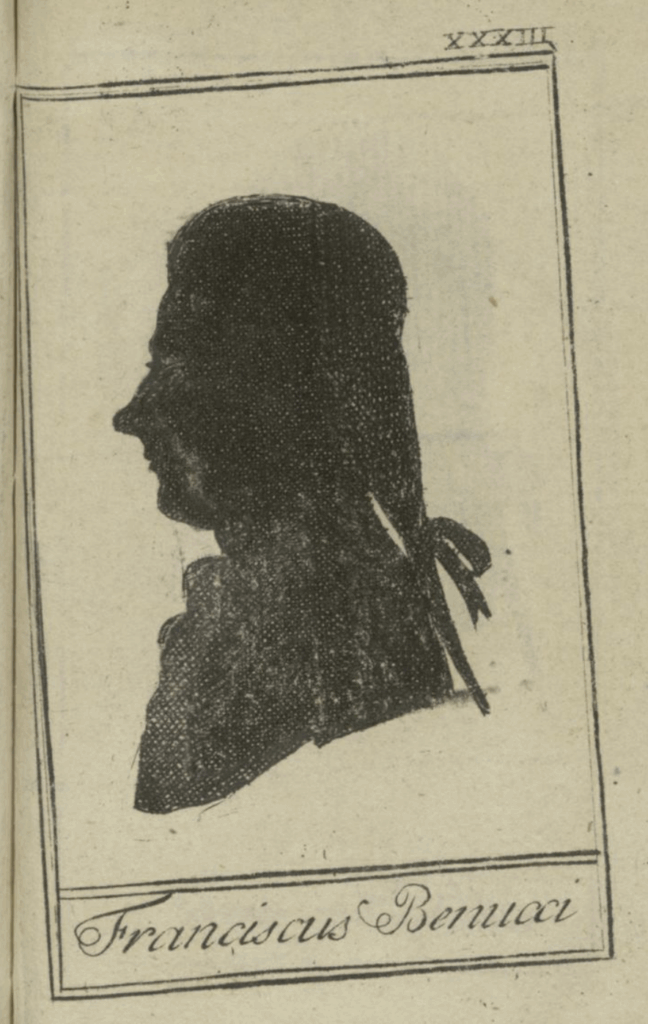
Francesco Benucci, bass – the original Figaro – silhouette portrait by Hieronymus Löschenkohl, ca. 1786 – WienMuseum
Figaro is the clever servant at the center of all the chaos. He’s practical, quick on his feet, and not afraid to speak his mind. Mozart gives him a bass-baritone voice, a range with a lot of versatility, which fits Figaro’s role as he is constantly feeling and portraying different emotions: anger, love, joy, jealousy, to name a few.
In “Se vuol ballare,” Figaro is mocking the Count and laying out his plan to turn the tables on him. The music has a sneaky, sarcastic feel, with sharp rhythms that reveal Figaro’s intelligence and resourcefulness. Later, in Act 4’s “Aprite un po’ quegli occhi,” he sings a more cynical, frustrated tune about women and deception. Still, even when he’s angry, his bass-baritone voice helps keep him relatable and human, as supported by K. Mitchells, who says: “The baritone is well placed to represent normal man in contrast to the extreme and more specialized characters”(p. 49). His voicing helps to anchor the more ridiculous parts of the plot.
SUSANNA
Voice Type: Soprano
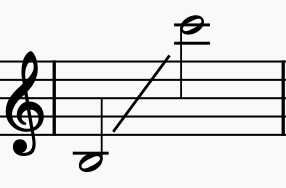
Range: B3 – C6
Fach: Light lyric soprano
Key Arias: “Deh vieni, non tardar” (Then come, do not delay)
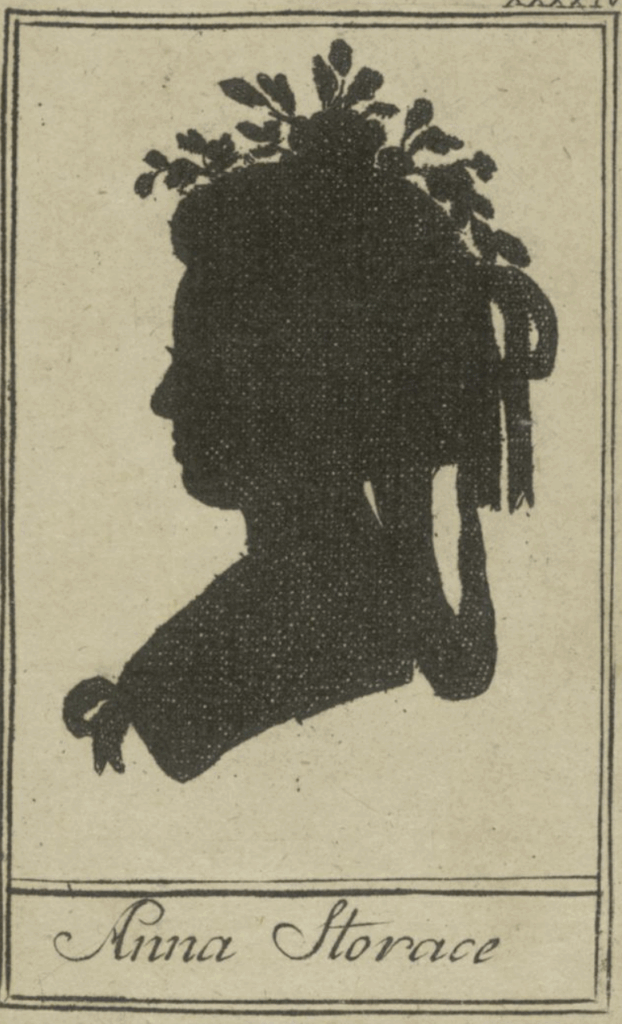
Nancy Storace, soprano – the original Susanna – silhouette portrait by Löschenkohl, ca. 1786 – Austrian National Library
Susanna is another servant, Figaro’s fiancée, and one of the sharpest, most capable characters in the opera. She’s confident, funny, and knows exactly how to handle both the Count’s sly advances and Figaro’s jealous outbursts. Mozart gives her a light, agile soprano voice that’s ideal for expressing quick thinking and charm.
Throughout the opera, Susanna has a lot of music that moves quickly and playfully, showing off her wit. But her most famous aria, Act 4’s “Deh vieni, non tardar,” is something different: calm, graceful, and full of intense feeling. The music reveals her love for Figaro, even as she is playing a trick on him, and greatly contrasts with much of her other music. It’s one of those moments where her voice really carries the emotional weight. The soprano line is clear and lyrical, reflecting both her intelligence and her ability to act from the heart.
COUNT ALMAVIVA
Voice Type: Baritone
Range: A3 – G4
Fach: Lyric baritone
Key Aria: “Vedrò mentr’io sospiro” (I will see while I sigh)
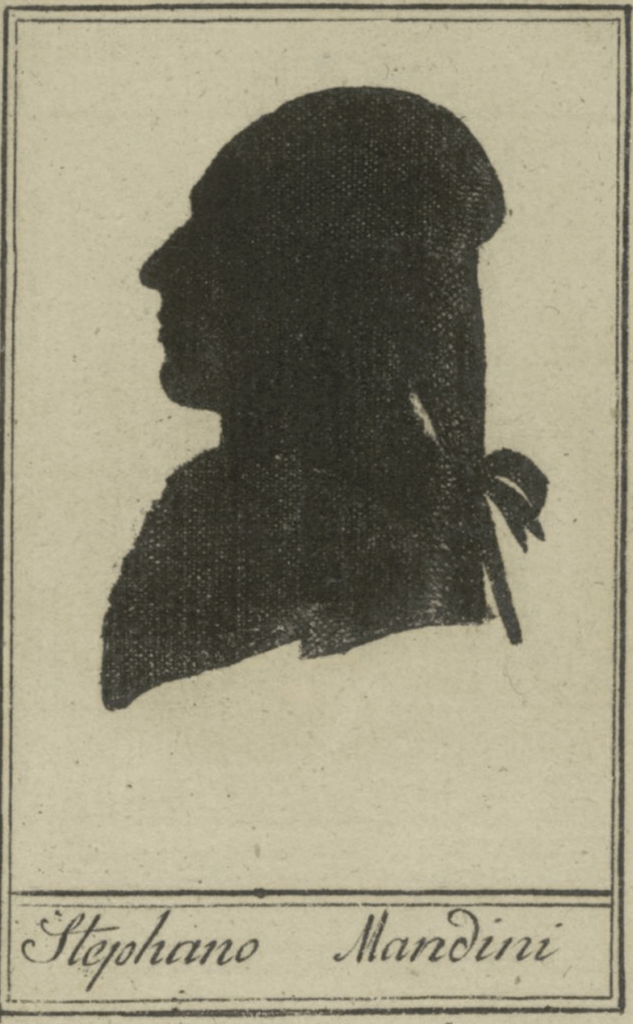
Stefano Mandini, baritone – the original Count Almaviva – silhouette portrait by Löschenkohl, ca. 1786 – Austrian National Library
The Count is written for a baritone voice. He, like his music, is sharp, dramatic, and forceful. He is a nobleman used to getting his way, and his voice reflects his authority and arrogance. The darker color of the baritone helps give his character a commanding and sometimes intimidating presence.
In “Vedrò mentr’io sospiro,” the Count reacts to the idea that his plans might be falling apart. The aria shifts between angry outbursts and moments of scheming self-pity, revealing how quickly his emotions change. The vocal lines are bold and intense, with sudden dynamic changes that show just how emotional and reactive he is.
COUNTESS ALMAVIVA
Voice Type: Soprano
Range: G3 – C6
Fach: Lyric soprano
Key Arias: “Porgi, amor”, “Dove sono” (“Cupid, love”), (“Where am I?”)

Luisa Laschi, soprano – the original Countess – silhouette portrait by Löschenkohl, ca. 1786 – Wikimedia Commons

The Countess is a more serious, reflective character. Her music is some of the most beautiful and emotional in the opera. Mozart also gives her a soprano voice; however, it is fuller and more lyrical than Susanna’s, which helps to set her apart. Her role is more about sadness, longing, and sentiment than cleverness or energy.
In the Countess’s cavatina (entrance aria) in Act 2, “Porgi, amor,” she’s hoping for her husband’s love again, and the music is slow and graceful, with long, smooth phrases that require real control. Act 3’s “Dove sono” reflects on her past happiness and her hopes for the future, and it moves between quiet sorrow and triumphant optimism. Her voice brings a sense of dignity and emotional depth to the opera. She’s not part of the comedic chaos in the same way the others are; her music reminds us of the very real feelings underneath the comedy, though that is not to say she doesn’t get involved.
CHERUBINO
Voice Type: Mezzo-soprano (see trouser roles)
Range: A3 – B5
Fach: Lyric mezzo-soprano
Key Arias: “Non so più cosa son, cosa faccio” (I no longer know what I am, what I’m doing), “Voi che sapete” (You who know what love is)
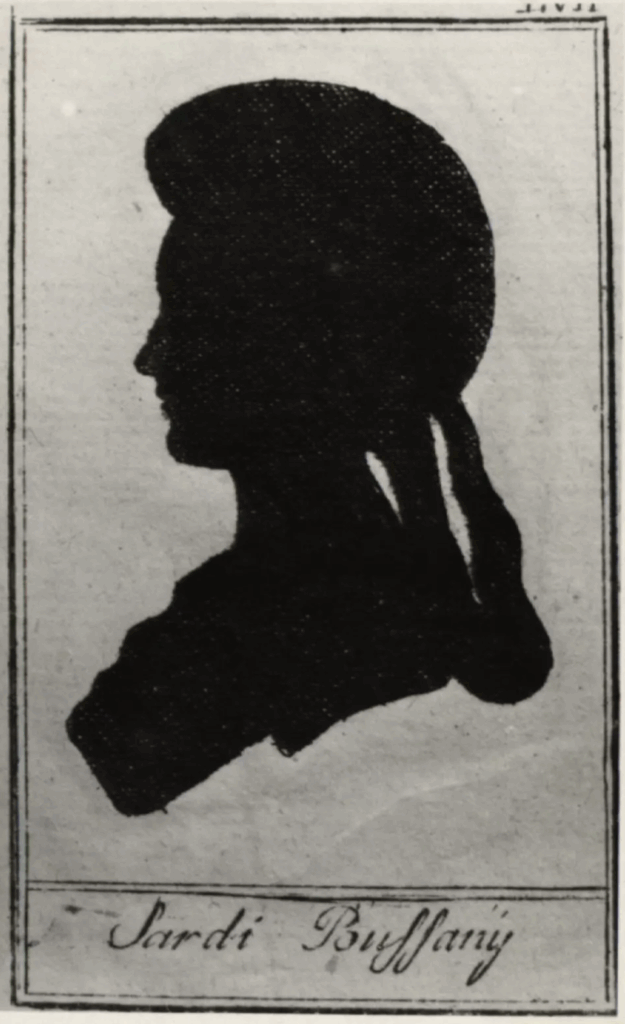
Dorothea Bussani, mezzo-soprano – the original Cherubino – silhouette portrait by Löschenkohl, ca. 1786 – WienMuseum
Cherubino is a teenage boy caught up in his feelings, especially when it comes to love. He’s played by a mezzo-soprano, which means he’s sung by a woman even though he is a male character. This gives him a unique vocal sound, lighter and more flexible than the adult male characters, but not as bright as a soprano.
In “Non so più,” Cherubino sings to Susanna about how overwhelmed he is by desire, and the music reflects that with a fast pace, sudden dynamic shifts, and breathless phrasing. It feels like he can barely keep up with his own emotions. “Voi che sapete” is softer and more heartfelt, but still slightly mischievous, as he sings his song to the Countess, whom he is deeply infatuated with, even more so than with all of the other women. The mezzo voice captures the awkwardness of a young boy trying to understand what he’s feeling and adds a layer of charm and humor to his character.
Final Thoughts
What is really impressive about Le nozze di Figaro is how well the vocal writing fits each character, not just in terms of range, but in personality and emotion. Mozart doesn’t just assign voice types at random. Each one adds something important to the character’s identity and to the storytelling overall. Whether it’s Susanna’s wit, the Countess’s sorrow, or Cherubino’s hormonal chaos, the voice types help bring each moment to life.
Sources
for full citations, see Learn More
- Carter 1987, W. A. Mozart, Le nozze di Figaro
- Link 2022, The Italian Opera Singers in Mozart’s Vienna
- Mayer 2004, “Arias for Nancy Storace, Mozart’s First Susanna”
- Mitchells 1970, ““Operatic Characters and Voice Type”
- Rushton 2002, “Nozze di Figaro, Le”
- Steane 2002, “Fach” and “Lyric Soprano”
- Jander, rev. Harris 2001, “Bass-baritone”