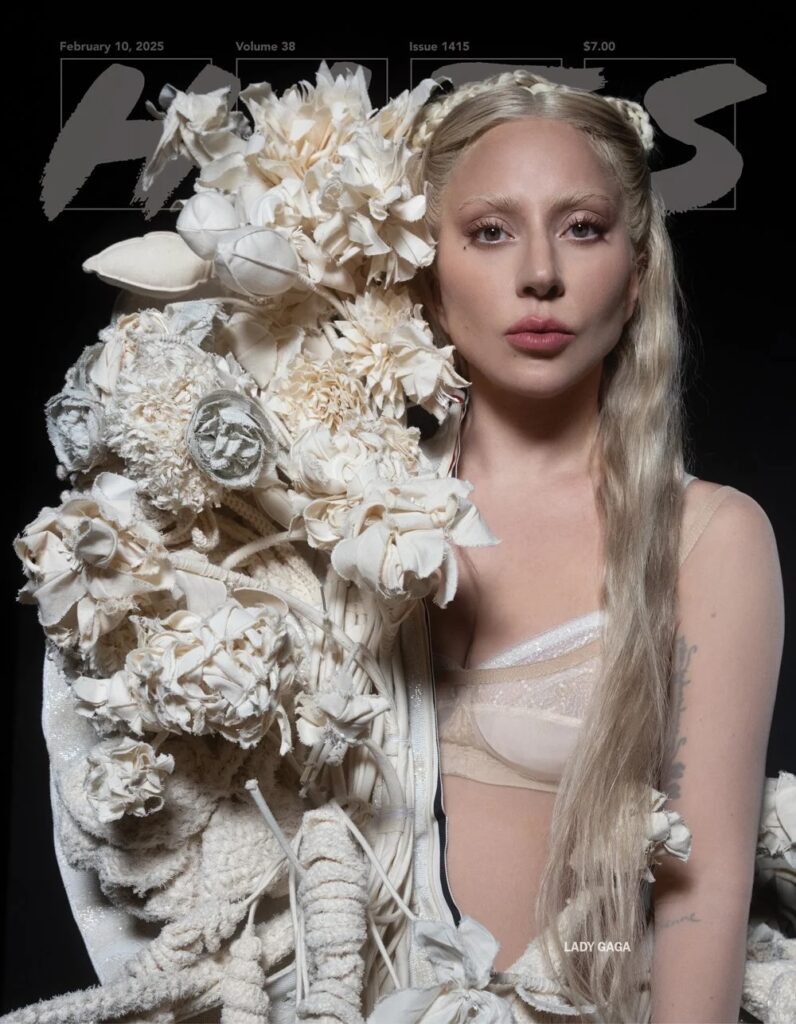
Image taken from Lady Gaga’s 2025 appearance on the cover of HITS magazine – her latest styling era takes inspiration from Baroque era fashion
Who was the Lady Gaga (creating iconic music and imagery known widely) of Mozart’s time? Was it Mozart with his concertos and symphonies? Despite what we generally think of as pop music today having popped up in mainstream culture in the last 100 years, pop music has been around in varying forms for centuries. At the time of Le Nozze di Figaro’s premiere at the Burgtheater in Vienna in 1786, two main types of popular music were common in Vienna, the German Lied and the French Vaudeville song. These song types influenced operatic composition, but were also present in daily life.
German Lieder
The German Lied was common for Mozart and his day-to-day life in a German-speaking region in what is now modern-day Austria. Despite the Lied tradition being commonly associated with Franz Schubert, it was a long-standing tradition by the time he popularized it. A large collection of German Lieder was published in 1767, the Lieder der Deutschen, and the songs were both secular and sacred works. Lieder and keyboard parts in the second half of the eighteenth century were reimagined in Vienna while retaining its “distinct diatonic clarity and fondness for sparse textures.”1 Vienna began to develop its own distinctive Lieder style around the same time that Mozart relocated to Vienna and would have been immersed in Viennese musical culture. Mozart wrote multiple Lieder and his music is also thought to have influenced some of Schubert’s Lieder.2
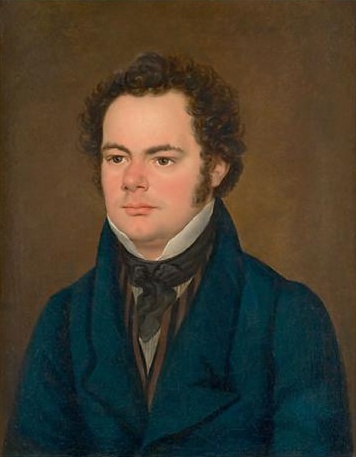
Anton Depauly, portrait of Franz Schubert, ca. 1827 – Wikimedia Commons

French Vaudeville
The French Vaudeville was a comedic song style that was very popular in French society. Vaudeville was common in both everyday life and in theater.3 It was closely connected with urban songs, but with the development of opera comique, French Vaudeville began to move into the elite opera sphere in the early eighteenth century.4 It combined common tunes, many of which are referenced in common nursery rhymes that persist to today,5 with satirical lyrics that covered a variety of topics including love, drinking songs, village stories, and more.6 Beaumarchais had written vaudeville songs for other theatrical works and was familiar with it for Le Mariage. In Vienna, Mozart and Austrian audiences would have been familiar with the vaudeville song, as in 1752 the Burgtheater began to perform predominately French works.7
Le Mariage de Figaro and Le Nozze di Figaro make use of stage songs with the most popular coming from Cherubino in Act 2 of both the play and opera. In the play, it is to the tune of a common folk song that the audience would have recognized and have engaged with in previous contexts known as “Marlborough.” In English it is the same tune as “He’s A Jolly Good Fellow.” Cherubino’s song is an example of romances which were on a simple yet tragic love story, which was more exemplified in Le Mariage which is about his infatuation with the Countess. He sings about being in love with her and how it pains him to be unable to be with the Countess, his Godmother.8
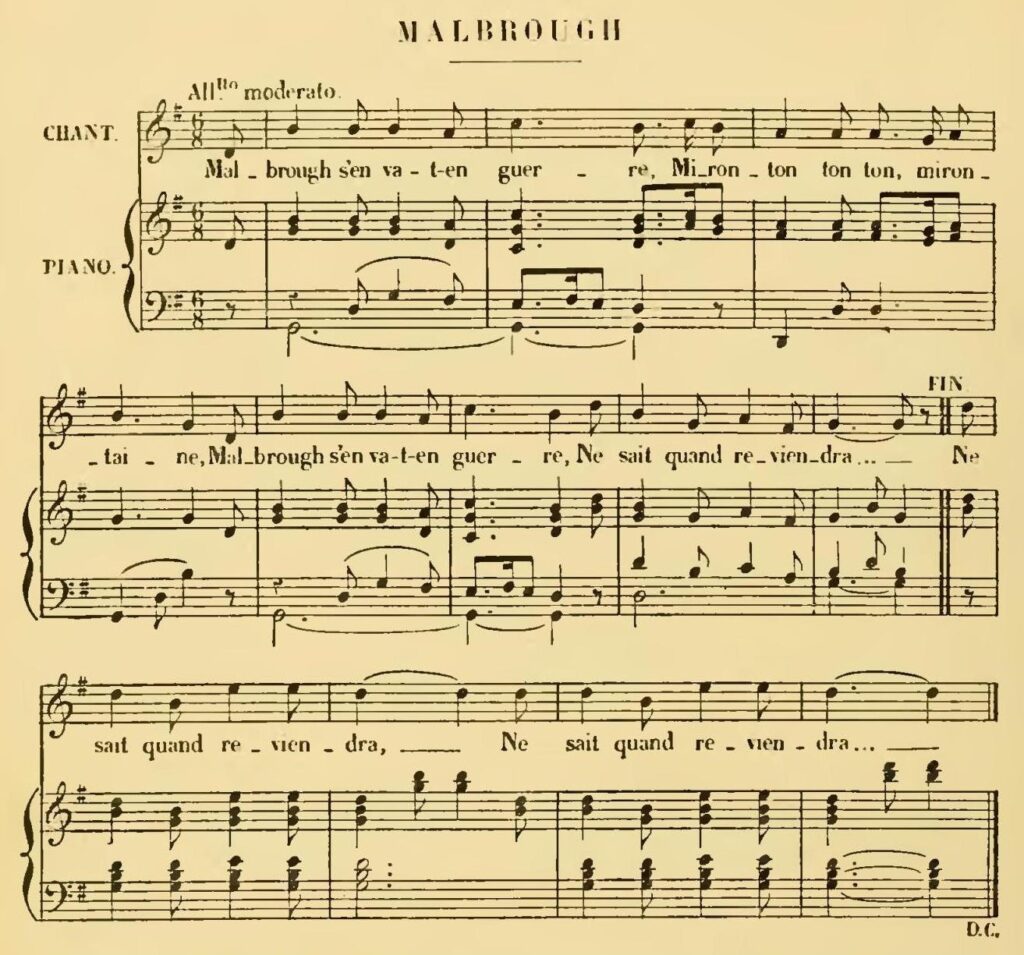
“Malbrough,” from Chansons et rondes enfantines (1870) – Wikimedia Commons

Watch a 2021 recorded version of the vaudeville song Cherubino sings in Le Mariage de Figaro by Beaumarchais
Da Ponte’s opera libretto departs from Cherubino’s specific infatuation with the Countess in the Beaumarchais, and the text shifts to a more general infatuation with love itself. “Voi che sapete,” the aria sung by Cherubino, is described as a song that he wrote for the Countess. But the only line he sings explicitly about someone other than himself is “Voi che sapete”: “You who know what love is/ladies, see whether it’s in my heart.”9
Watch a 1993 staging of “Voi che sapete” in Mozart’s opera Le Nozze di Figaro
The opera tones down this relationship and takes away the familiar folk song, but it is still an iconic and recognizable aria in the opera canon, especially for its varied stage settings that sometimes play up the relationship Cherubino has with the Countess. Turning the ideas about love inward onto Cherubino’s self could be connected to the stricter court environment that dictated Viennese theater and also called for the elimination of the original Le Mariage Act III of the Court setting. It is notable that Mozart did not choose a folk song to use for the setting of Da Ponte’s text. “Voi che sapete” has become a recognizable and popular aria in the opera canon to this day.
Conclusion
Understanding the popular music styles of the eighteenth century in French Vaudeville song and German Lieder helps to contextualize the use of stage songs in both the play Le Mariage de Figaro and the opera Le Nozze di Figaro. In Le Mariage Beaumarchais explicitly uses a French Vaudeville song for Cherubino’s stage song, however this format is lost in the transition to the opera by Da Ponte and Mozart, likely in connection with the change in lyrics and meaning. Nonetheless “Voi che sapete” creates a captivating and iconic aria in Le Nozze di Figaro.
Endnotes
for full citations, see Learn More
- Böker-Heil et al. 2001, “Lied”. See also Parsons 2004, “The Eighteenth-Century Lied.” ↩︎
- Dittrich 2004, “The Lieder of Schubert,” 92. ↩︎
- Barnes 2001, “Vaudeville”. ↩︎
- Linklater 2015, “Vagaries of the Vaudeville: Notated Music in French Opera Librettos, 1753-1779″: 200. ↩︎
- Levenson 2023, “‘Theatre as a Nursery of Language’: Learning French through Vaudeville Tunes in Eighteenth-Century England,” 13. ↩︎
- Packer 1970, “La Calotte’ and the 18th-Century French Vaudeville, 63. ↩︎
- Brown 1991, Gluck and the French Theatre in Vienna. ↩︎
- Brown 1986, “Beaumarchais, Mozart and the Vaudeville: Two Examples from ‘The Marriage of Figaro'”: 261. ↩︎
- Translation from Vocal Music Instrumentation Index. ↩︎