One particularly fun job for a costume designer when designing The Marriage of Figaro is when the Countess and Susanna disguise themselves as each other to deceive the Count. Susanna’s look must be identifiable enough to convey this prank to the Count as well as the audience. The SF Opera costume designer, Constance Hoffman, describes his simple solution where “Susannah is able to adjust her wedding dress to be more Countess like, and the Countess able to hoist up her dress to have more of a Susanna feel.”
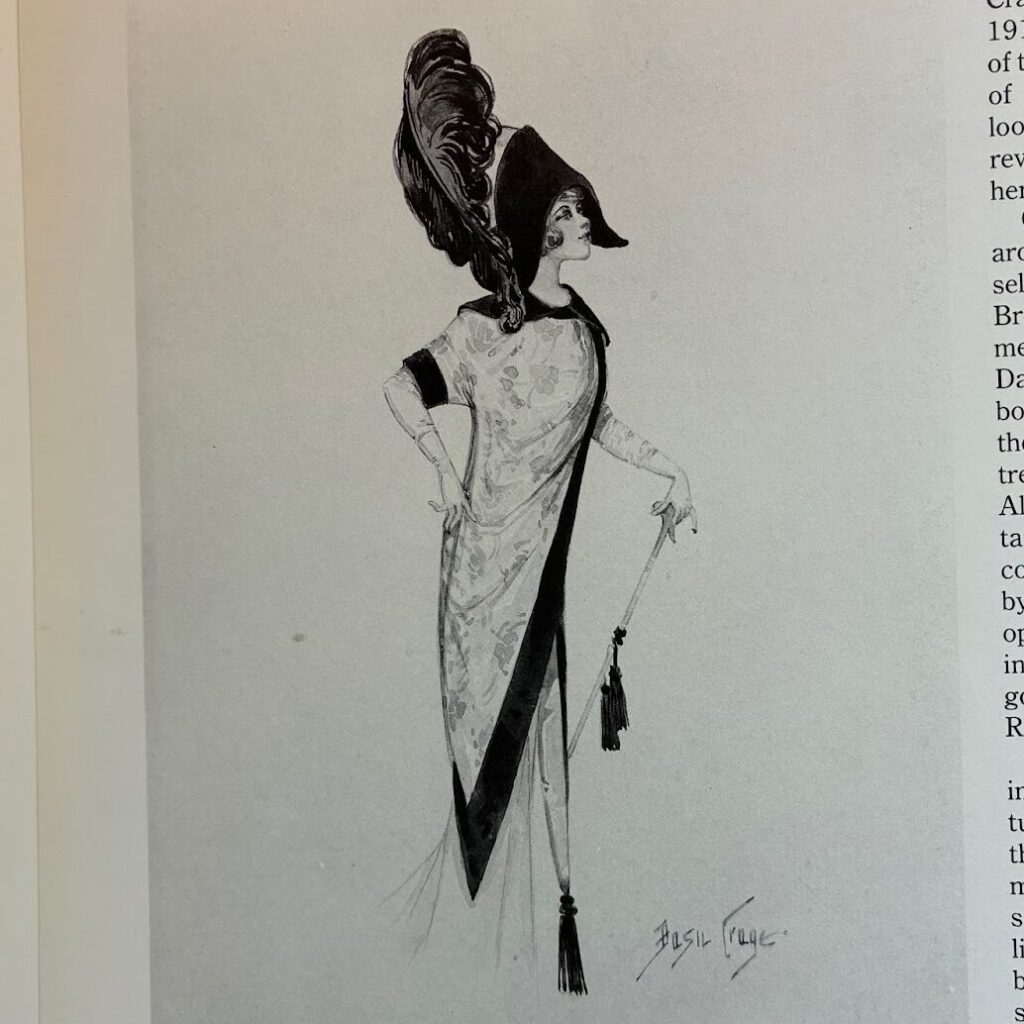
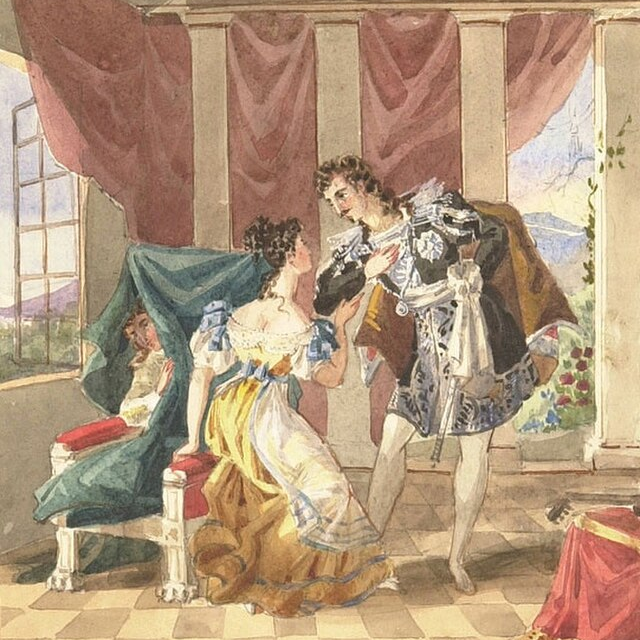
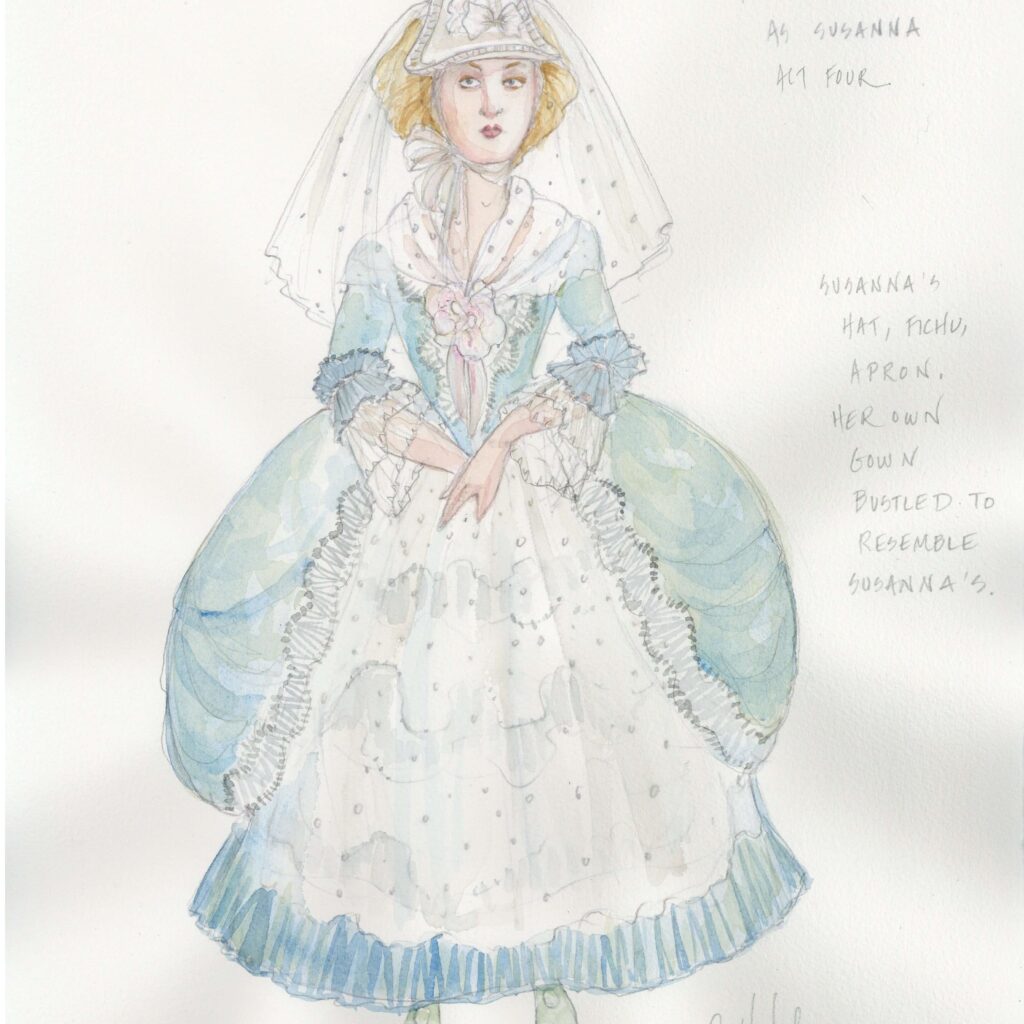
This change particularly highlights the class divides that a costume designer must convey when designing the costumes. In the character descriptions for The Marriage of Figaro, the Countess’ role is described as “one of the more difficult in the play”, and her costume for Acts I, II, and IV, is described as “a loose indoor gown and nothing on her head and hair […] in the last Act she wears Suzanne’s clothes and her headdress crowned with flowers.”
Modern-day production design: set design functionality
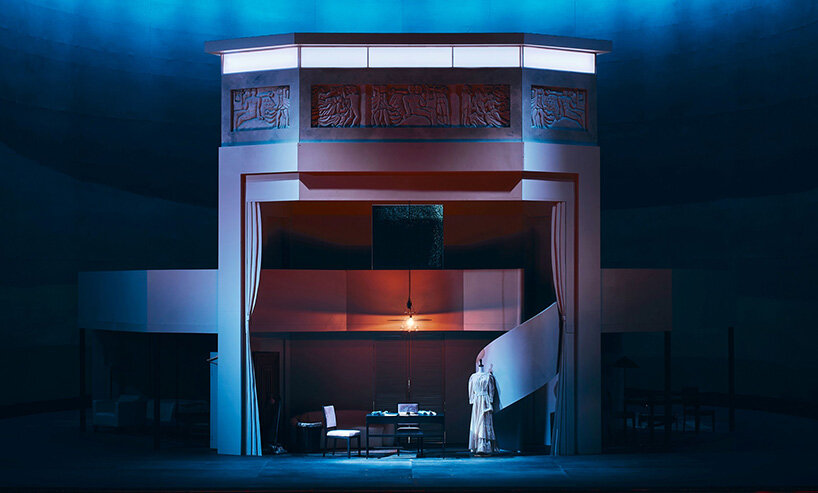
For Korea National Opera’s production of The Marriage of Figaro, architect Pierre Yavanovitch designed a modern set focused on form, material, and symmetry. Countess Almaviva’s room features pink themes, a spiral staircase, and a minimalistic interior. This design is more reflective of her character rather than a historically accurate reproduction; the room is closer to a young girl’s room instead of a Countess’s room. An intimate view into a noble woman’s room allows the audience to feel more sympathetic towards’ the Countess- she is less of an intimidating figure because of the set design. Seeing this side of the Countess is something that none of the original productions include. In this sense, design plays an integral part in the character portrayal and development.