Categories
Waypoints

Tangible Cellular Automata

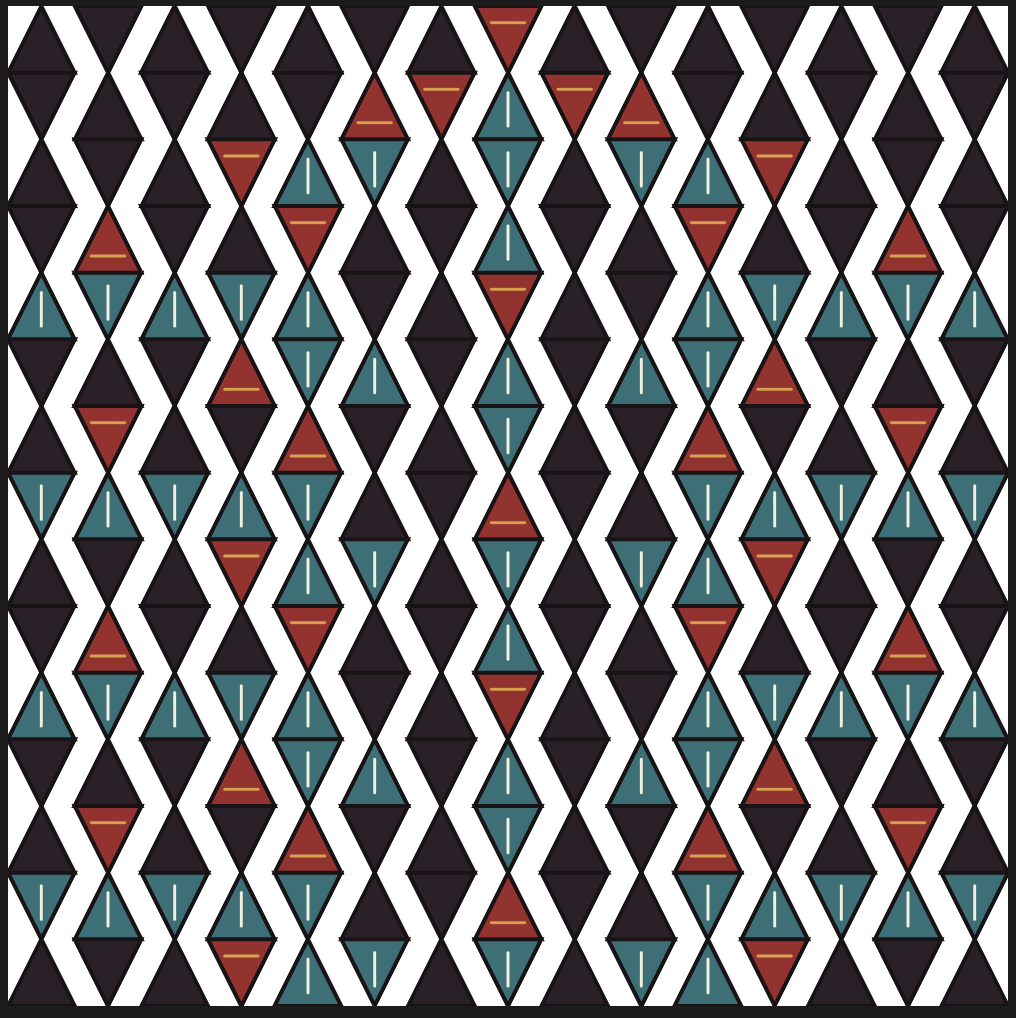
This project was inspired by Anatolian Kilim half from the 19th century. I wanted to sort of replicate the triangular cellular automata, play with different colors and make a design that I can embroider. I used elementary cellular automata, but reworked it so instead of a square grid, each cell is drawn as a triangle alternating up and down across the grid. This is done by checking the whether the sum of the coordinates are even or odd, where every adjacent tile flips orientation ( up or down ).

Each state of the cellular automata is treated as a visual layer within the rug ( as a scarf in my case ). State 0 is treated as a fill to a charcoal color, State 1 sets the base color of the triangles as crimson with the horizontal gold accent, and State 2 sets the base color of the triangles as teal with an ivory horizontal accent.

Instead of only checking adjacent neighbors, I have coded it to also evaluate it as a radius 2 neighborhood, so 2 left + 2 right, instead of 1. With all these changes made to the regular cellular automata that was created in Lab 1, I have made a design as such: https://editor.p5js.org/ferna22w/full/n0YLknUe0
Categories
Waypoints

Waypoint One

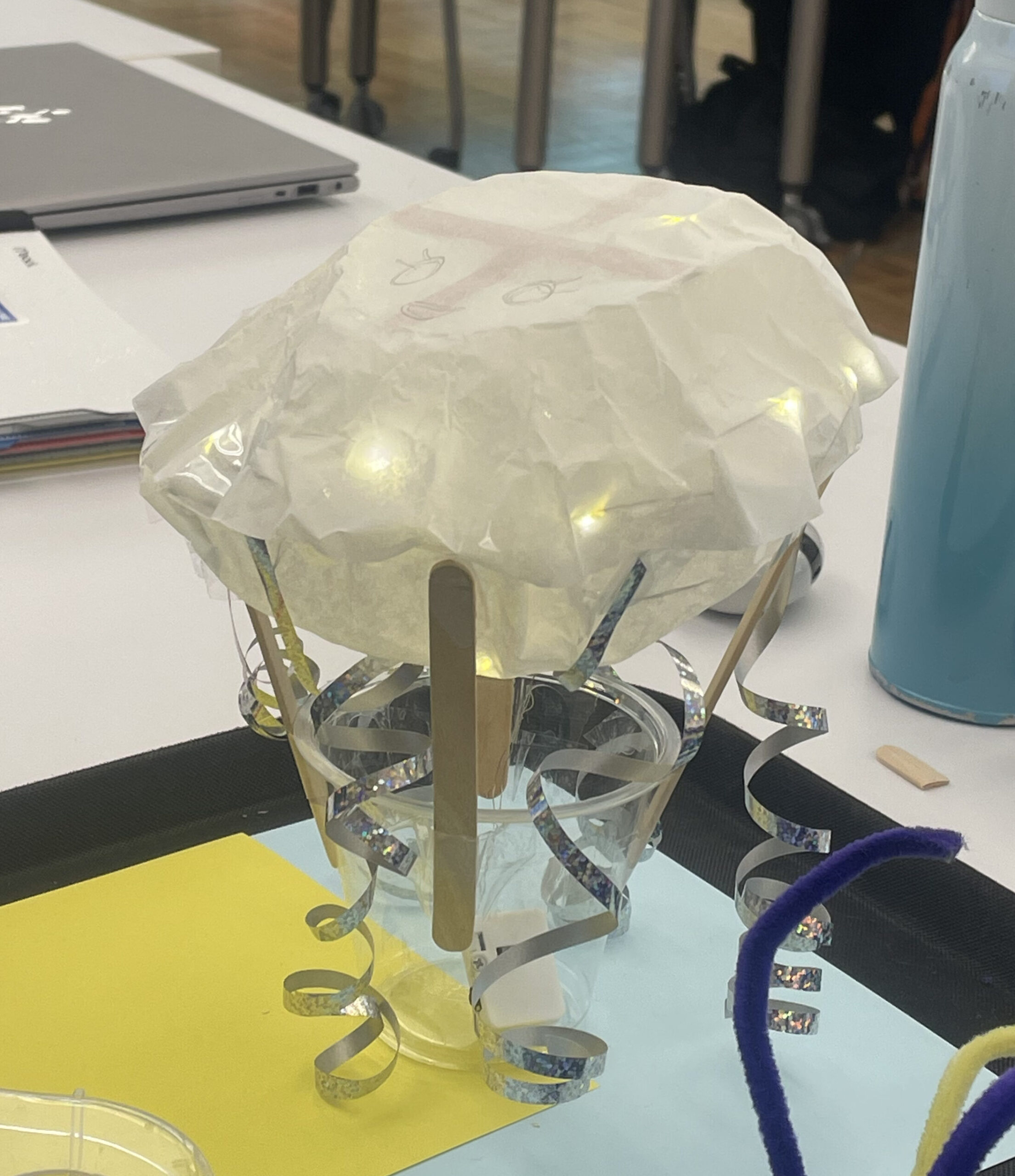
Where I think communication was most impactful during these two class sessions I think was when we wrote the step-by-step procedure for the other group on the tangible object we made. When watching the other group executing our instructions, it was interesting to see what parts of the instructions we didn’t mention and how important it is to be specific. I also noticed that when we were trying to execute the instructions they wrote down for us. There is something to say about how different people visualize things, and how that adds to the abstract concept of an algorithm and its ability to produce a similar result with different ways of execution.

When we practiced through the worksheet for the cellular automata, I very much enjoyed finding patterns with other people and definitely felt like I understood the concept more once we put it into practice. Reiterating one of the takeaways that I wrote down, I think an important part of communication is taking initiative. With all these exercises, it is most likely that a lot of us have not come across these concepts, but it is important for someone to take that step and try and figure out how to execute the instructions. An important part of communication is being able to voice the problems that you come across when you try something new. With that being said, confidence in yourself is definitely something that helps with tackling these issues and improving communication skills.