Restoration Work

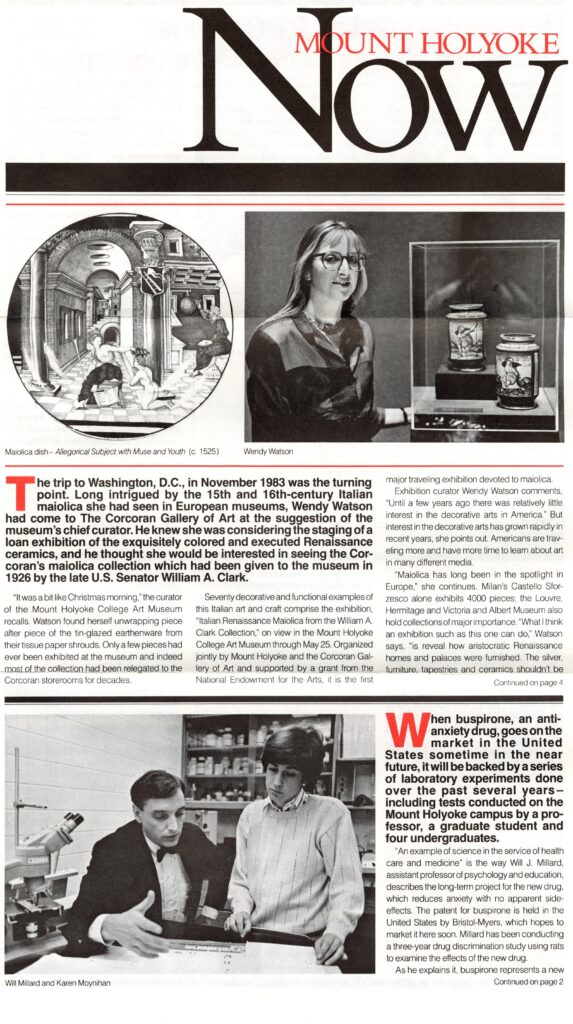
Mount Holyoke Now, two black in white photos, captioned; Maiolica dish- Allegorical Subject with Muse and Youth (c. 1525), and Wendy Watson, Article reads: The trip to Washington, D.C. in November 1983 was the turning point. Long intrigued by the 15th and 16th-century Italian maiolica, she had seen in European museums, Wendy Watson had come to the Corcoran Galley of Art at the suggestion of the museum's chief curator. He knew she was considering the staging of a loan exhibition of the exquisitely colored and executed Renaissance ceramics, and he thought she would be interested in seeing the Corcoran's maiolica collection which had been given to the museum in 1926 by the late U.S. Senator William A. Clark. "It was a bit like Christmas morning," the curator of the Mount Holyoke College Art Museum recalls. Watson found herself unwrapping piece after piece of the tin glazed earthenware from their tissue paper shrouds. Only a few pieces had ever been exhibited at the museum and indeed most of the collection had been relegated to the Corcoran storerooms for decades. Seventy decorative and functional examples of this Italian art and craft comprise the exhibition, "Italian Renaissance Maiolica from the William A. Clark Collection," on view in the Mount Holyoke College Art Museum through May 25. Organized jointly by Mount Holyoke and the Corcoran Gallery of Art and supported by a grant from the National Endowment for the Arts, it is the first major traveling exhibition devoted to maiolica. Exhibition curator Wendy Watson comments, "Until a few years ago there was relatively little interest in the decorative arts in America." But interest in the decorative arts has grown rapidly in recent years, she points out. Americans are traveling more and have more time to learn about art in many different media. "Maiolica has long been in the spotlight in Europe," she continues. Milan's Castello Sforzesco alone exhibits 4000 pieces; the Louvre, Hermitage and Victoria and Albert Museum also hold collections of major importance. "What I think an exhibition such as this one can do," Watson says, "is reveal how aristocratic Renaissance homes and palaces were furnished. The silver, furniture, tapestries and ceramics shouldn't be... continued on page 4.
Mount Holyoke Now, showcasing Watson’s successful maiolica exhibition, 1986.

Togas Optional!

Watson’s focus area in art history was Italian with a specialty in maiolica – a tin-glazed ceramic popular during the Renaissance – but also expanded into all kinds of Greco-Roman ceramic and statuary. One of her most significant exhibitions at the museum was centered on a bust of Empress Faustina the Elder, acquired in 1997, restored, and then put on display for the first time in 1999.
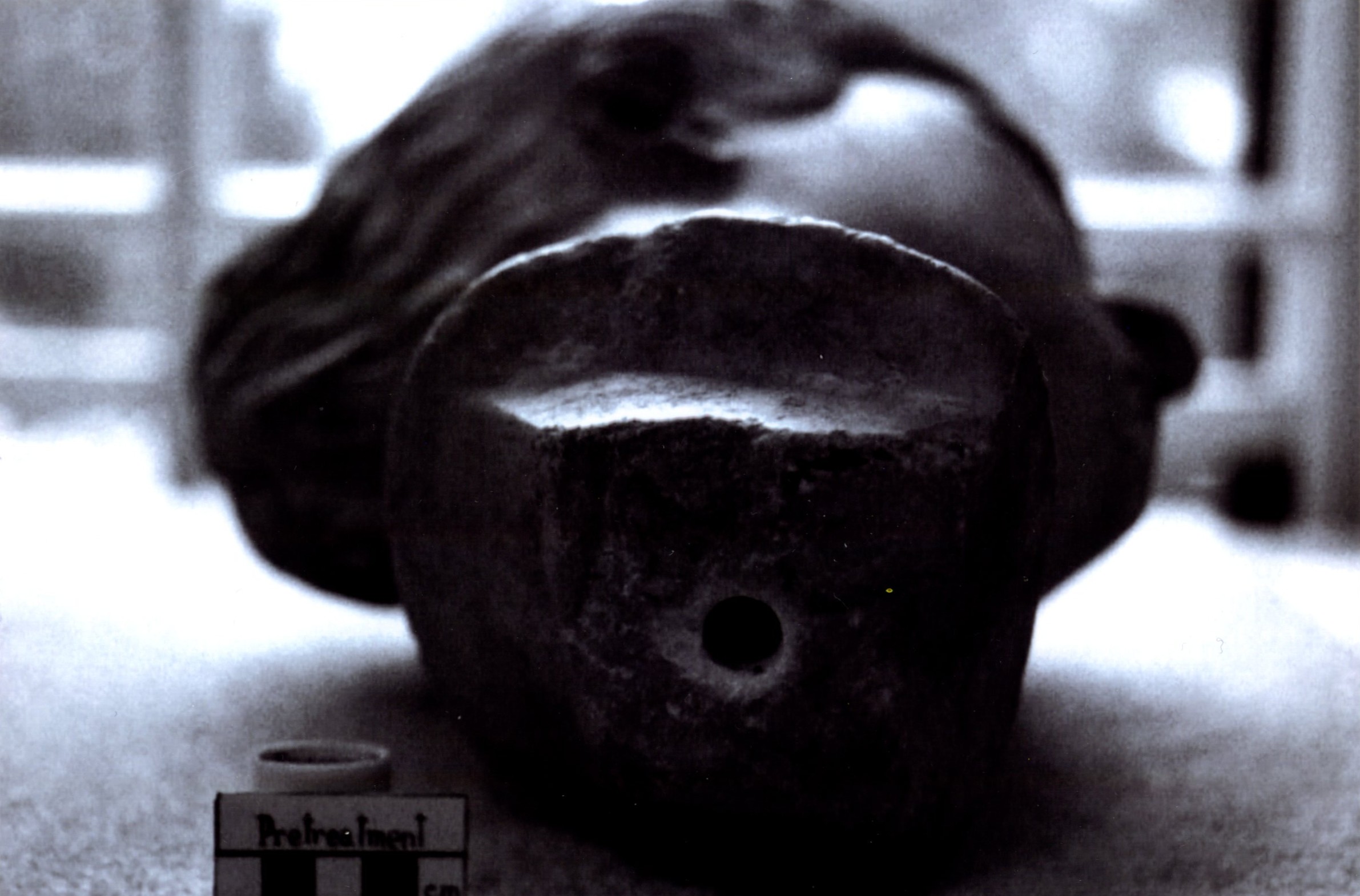
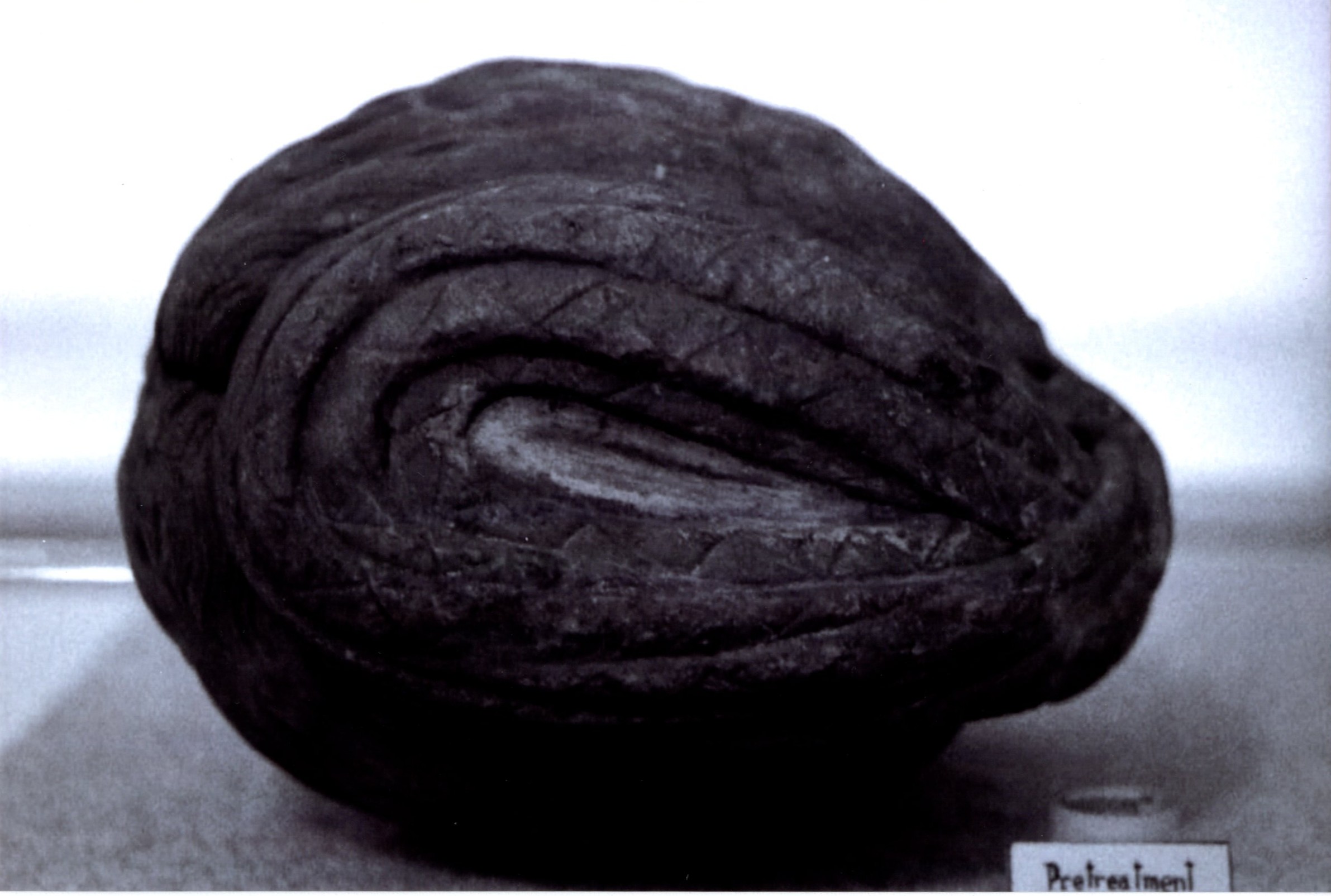
A black and white, close up photograph showing a Roman bust of a woman's head from below. A small placard next to the bust reads "Pretreatment"
Pretreatment
Photo of the braided hairstyle of a Roman bust. A small placard next to the bust reads "Pretreatment."
Pretreatment
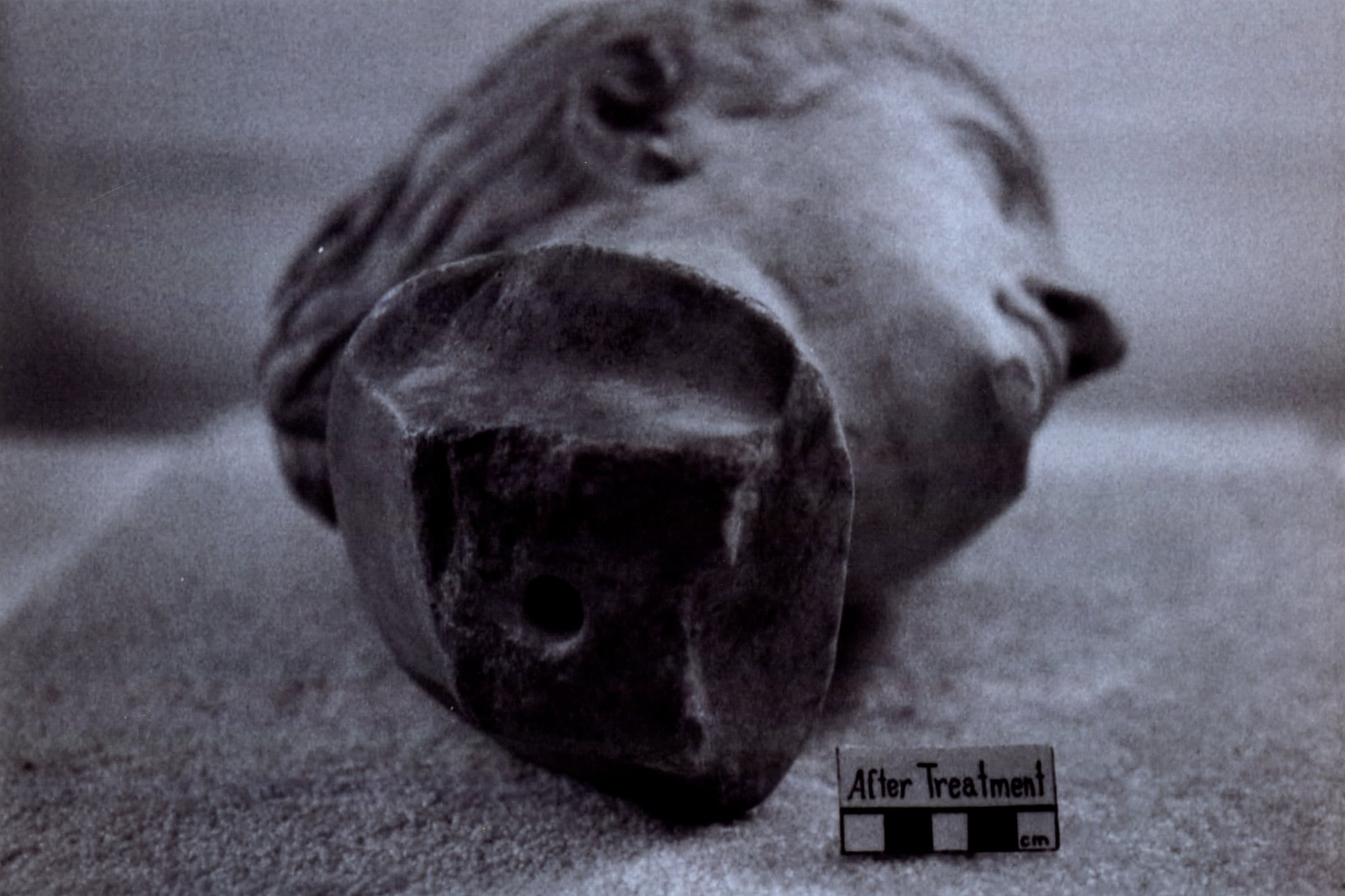
A black and white, close up photograph showing a Roman bust of a woman's head from below. A small placard next to the bust reads "After Treatment."
Posttreatment
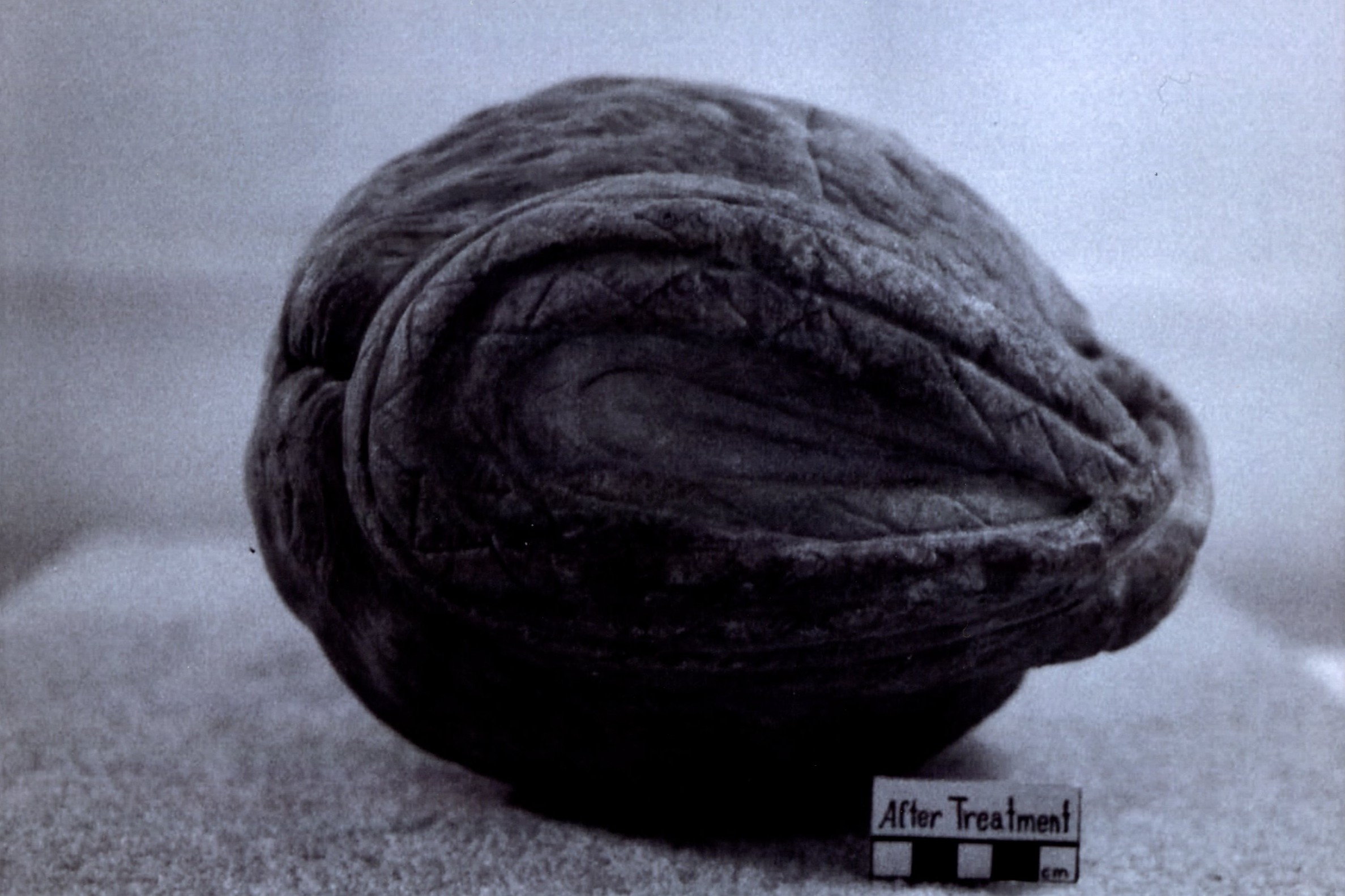
Photo of the braided hairstyle of a Roman bust. A small placard next to the bust reads "After Treatment."
Posttreatment

Above are four progress photos of the Faustina bust restoration, pretreatment left, post treatment right, between 1997 and 1999. Courtesy of the Mount Holyoke Art Museum.
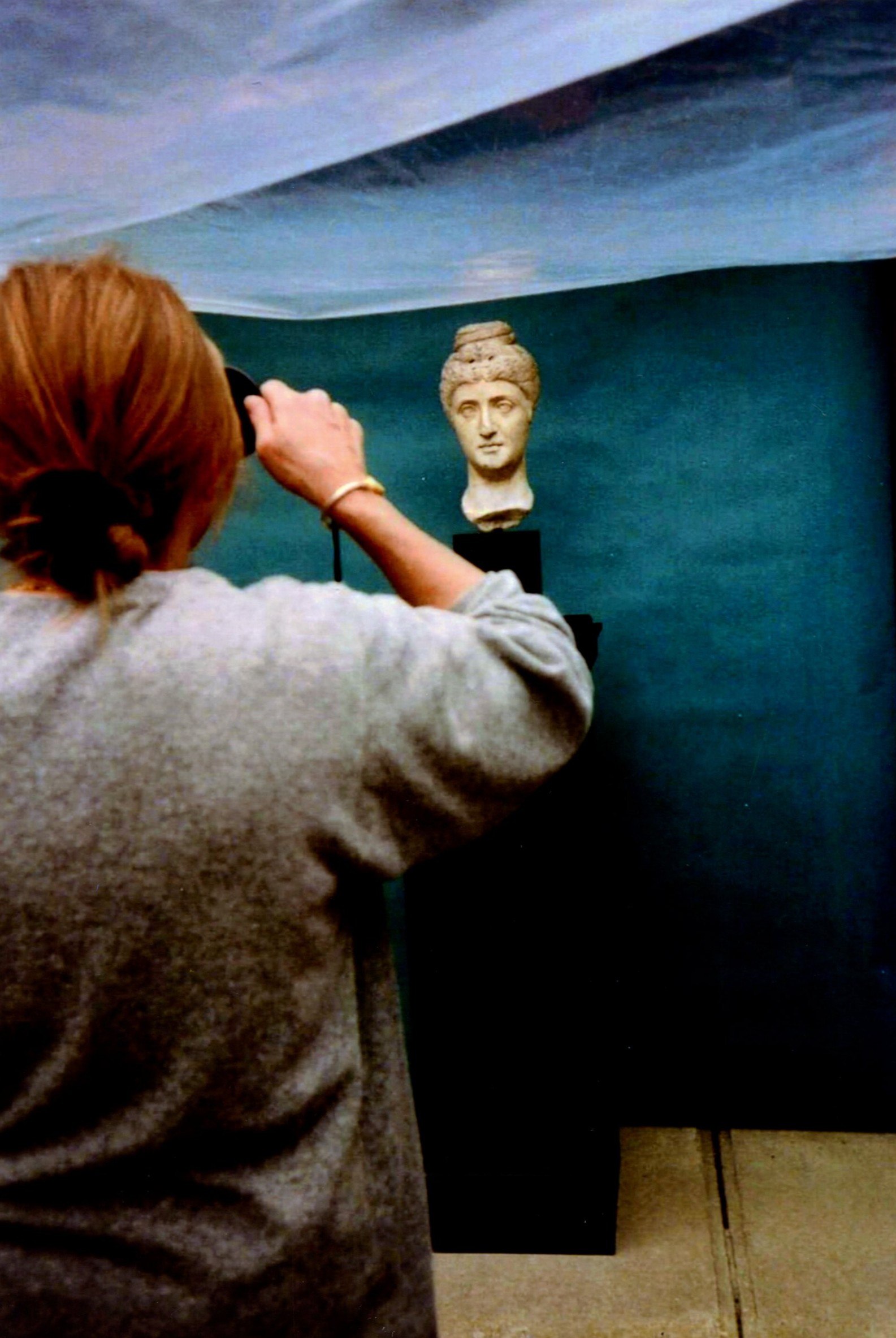
Wendy Watson capturing a photo of a Roman bust on a blue background.
Wendy takes photos of the Faustina bust, 1999. Courtesy of the Mount Holyoke Art Museum.
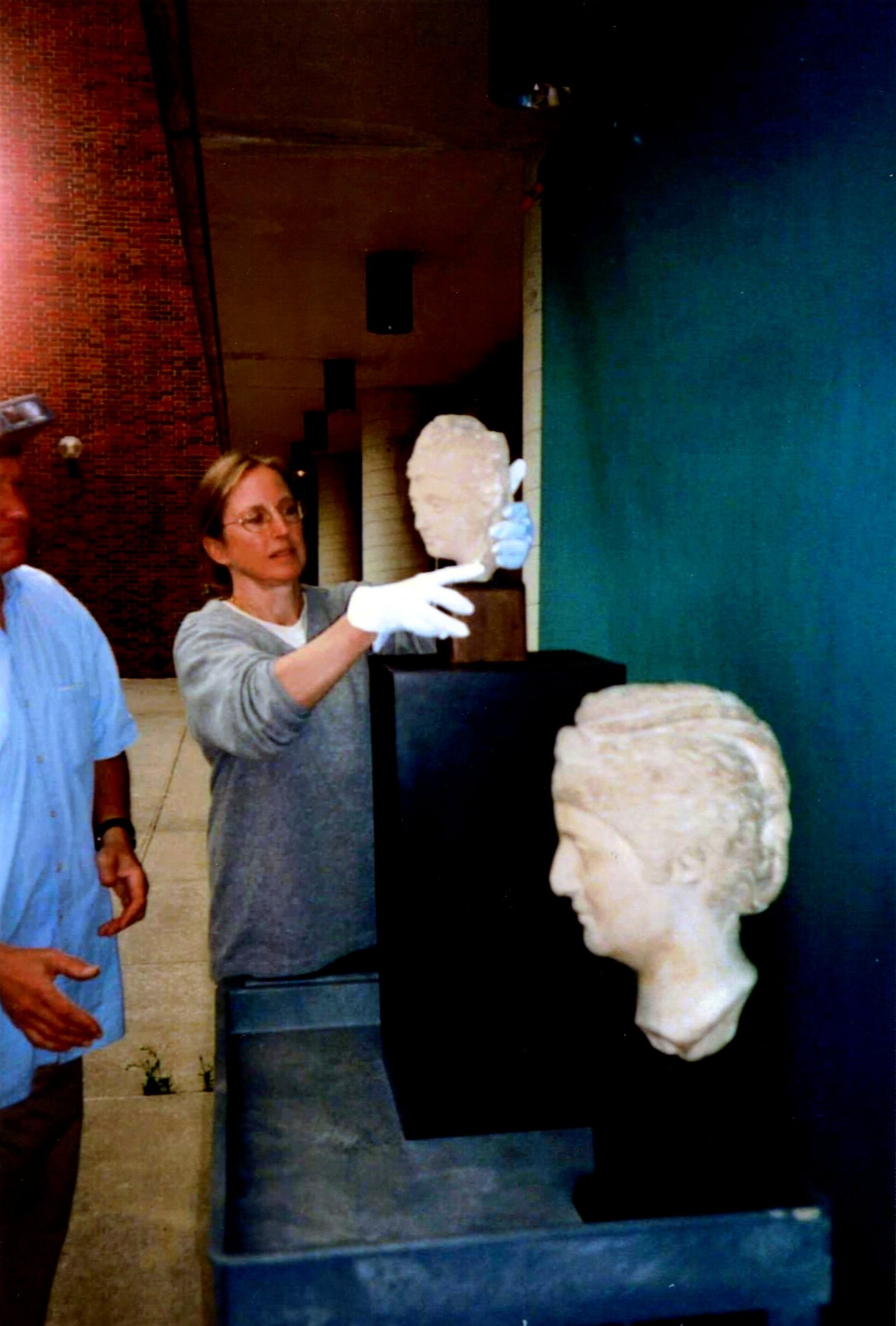
Wendy Watson positioning a Roman bust in front of a blue background
Wendy Watson and Ralph Liberman handling the Faustina bust and head of a Bodhisattva or celestial being for photos, 1999. Courtesy of the Mount Holyoke Art Museum.
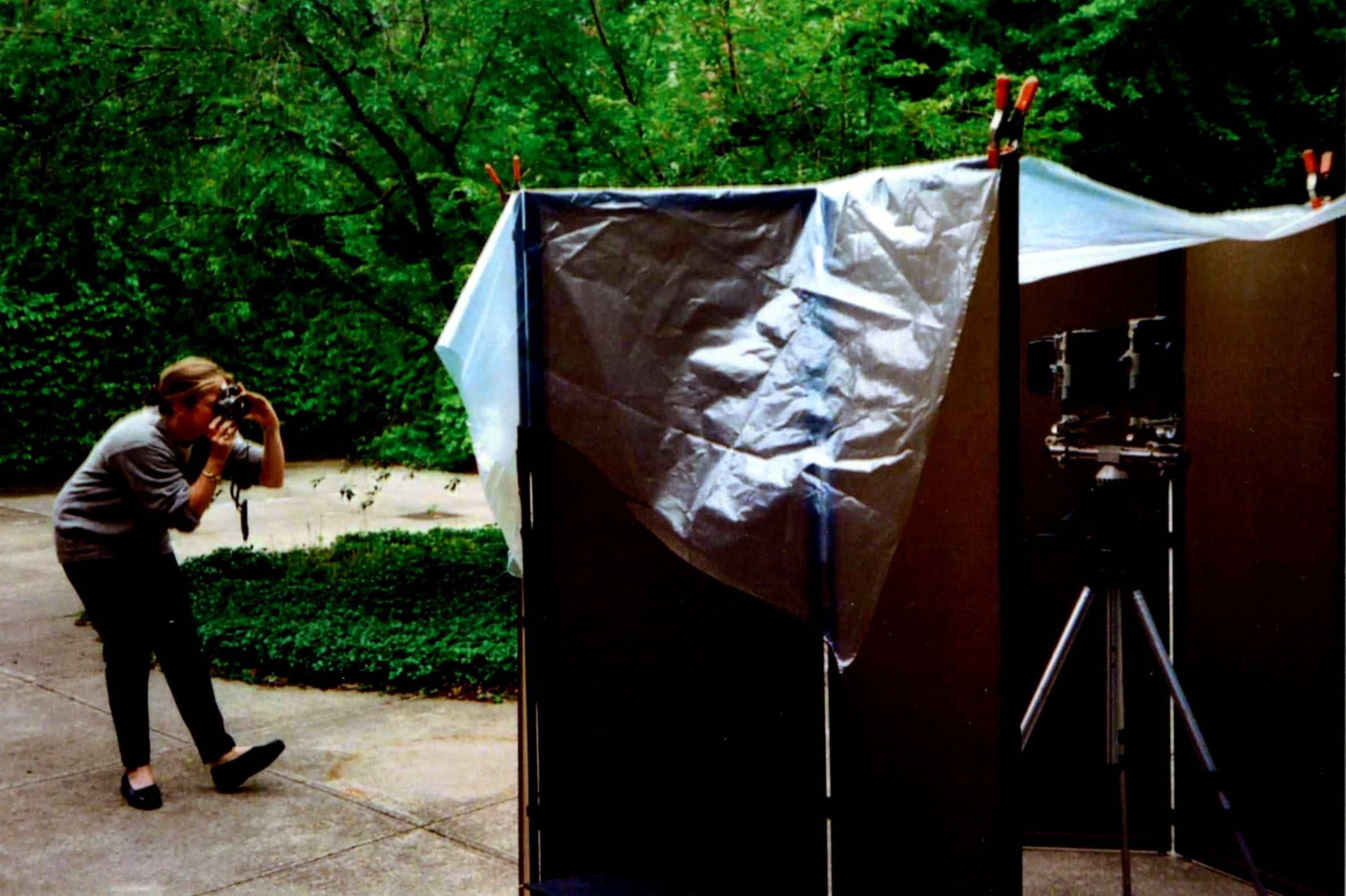
Wendy Watson capturing a photo outside
Wendy takes photos of the Faustina bust, 1999. Courtesy of the Mount Holyoke Art Museum.

Watson was very hands-on with the process of restoration and later preparation of the object for display. Invitations for the opening, told guests that “togas [were] optional” for the big day.  The bust has stayed on display since and will be seen again by students in the fall of 2026 with the Art Museum’s reopening.
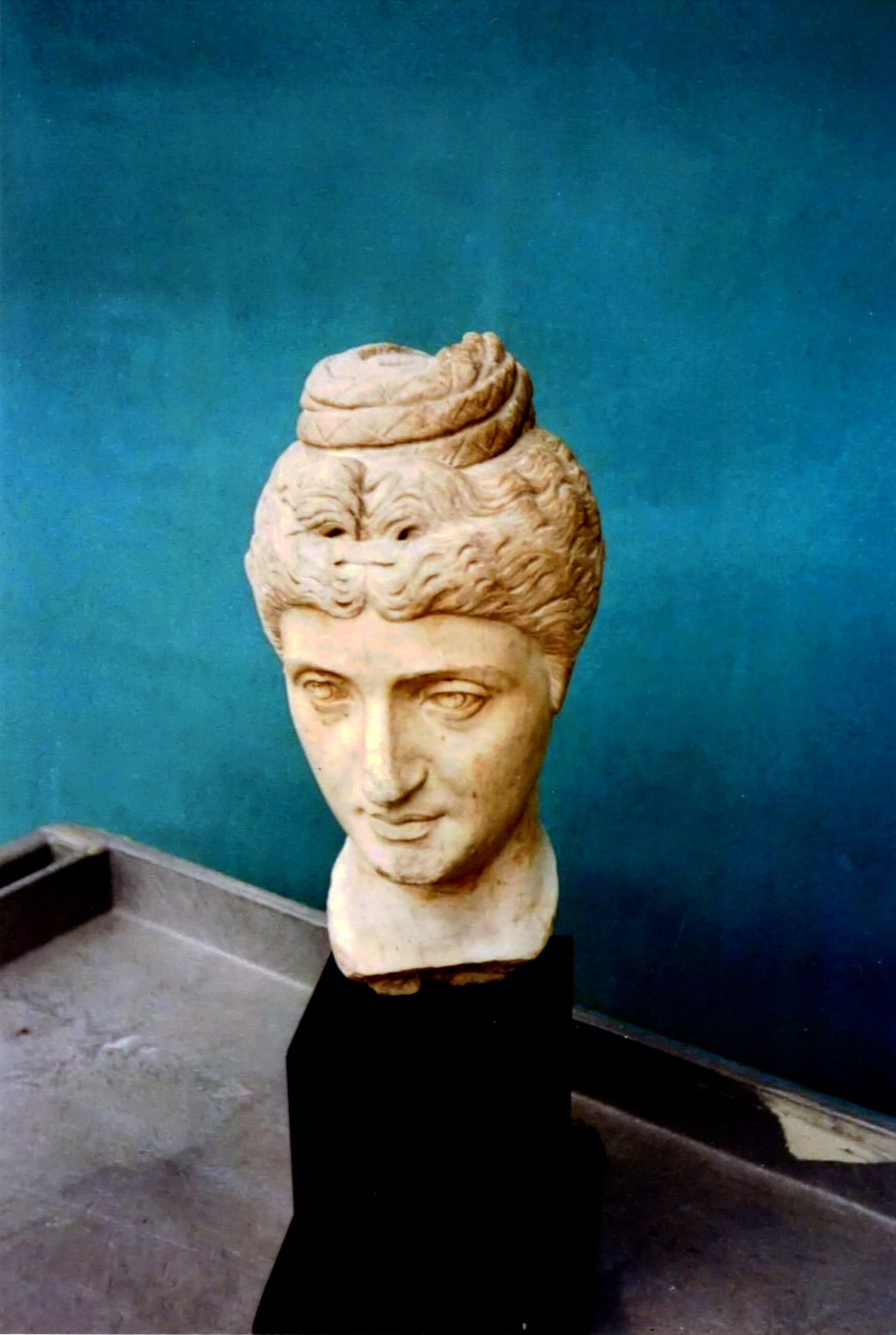
A color photograph of a cream-colored bust of a Roman woman in front of a bright blue background.
Above view of the restored Faustina bust, 1999. Courtesy of the Mount Holyoke Art Museum.
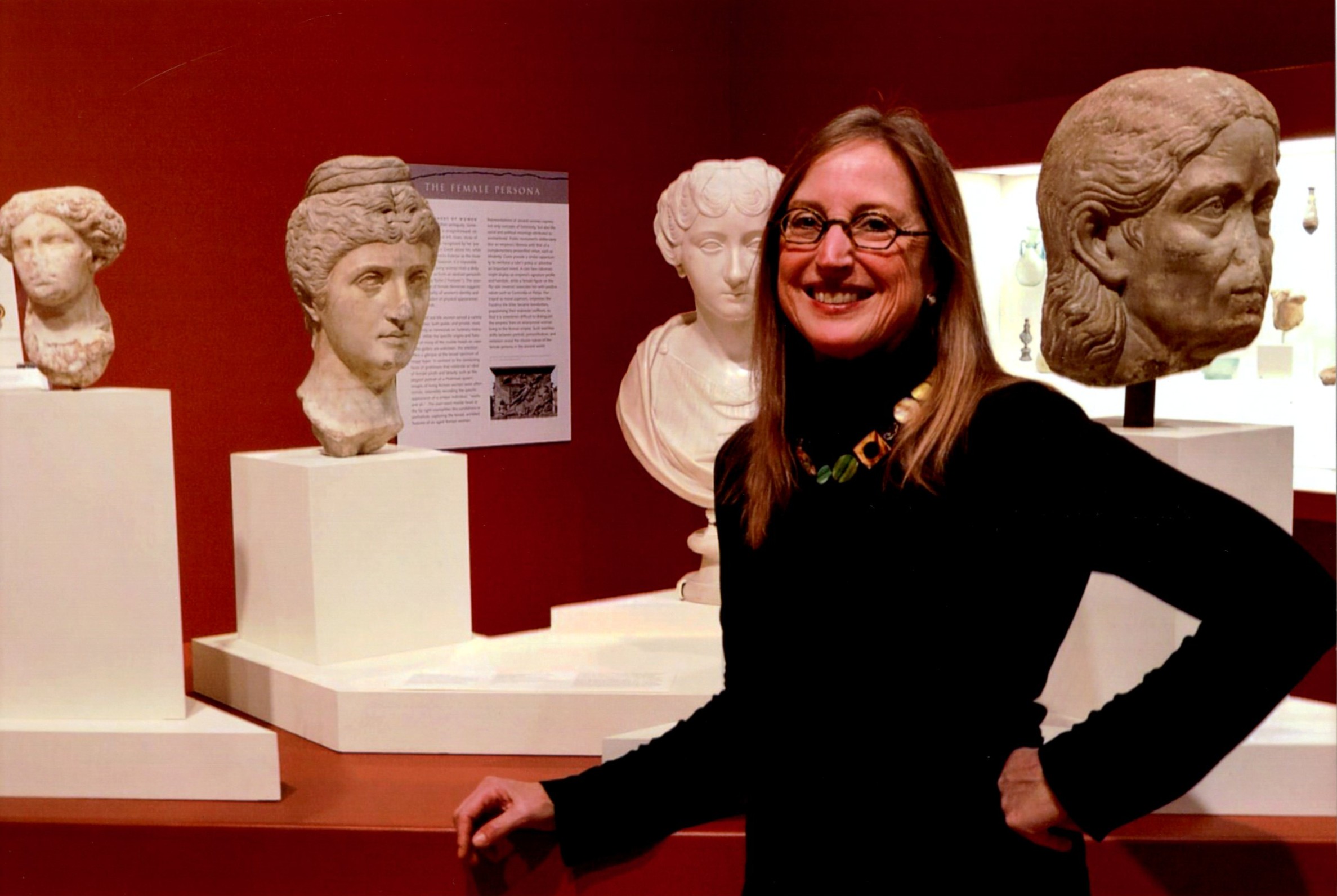
Wendy Watson smiling standing next to several roman busts of women in an art gallery, with bright red walls.
Wendy Watson as interim director of Mount Holyoke College Art Museum in the Ancient Gallery, 2010. Courtesy of the Mount Holyoke Art Museum.