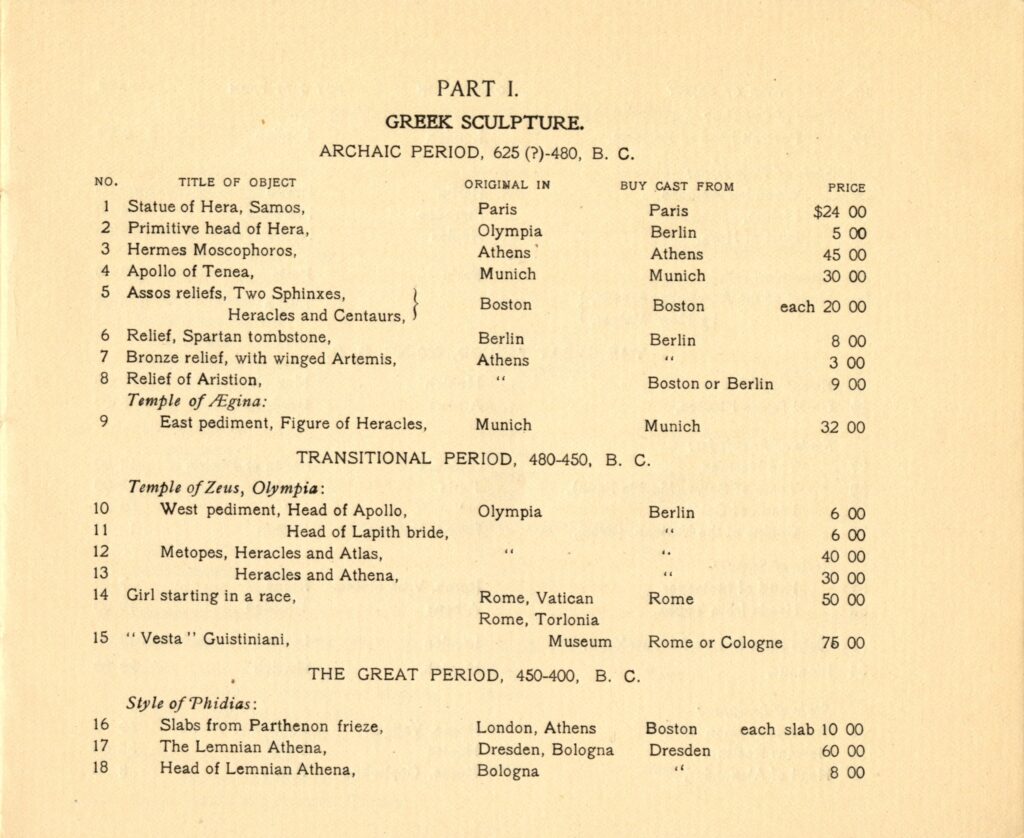
Fitz-Randolph created a purchase list of certain casts which she found to be necessary for the successful instruction of students in the history of art. In 1912, the last sizable shipment was delivered to Mount Holyoke and the list was completed. During Fitz-Randolph’s ample time abroad she collected casts to add to both the College’s and her personal collections. Her travel destinations included various art centers in Europe and Egypt including Paris, Munich, Rome, and Alexandria.
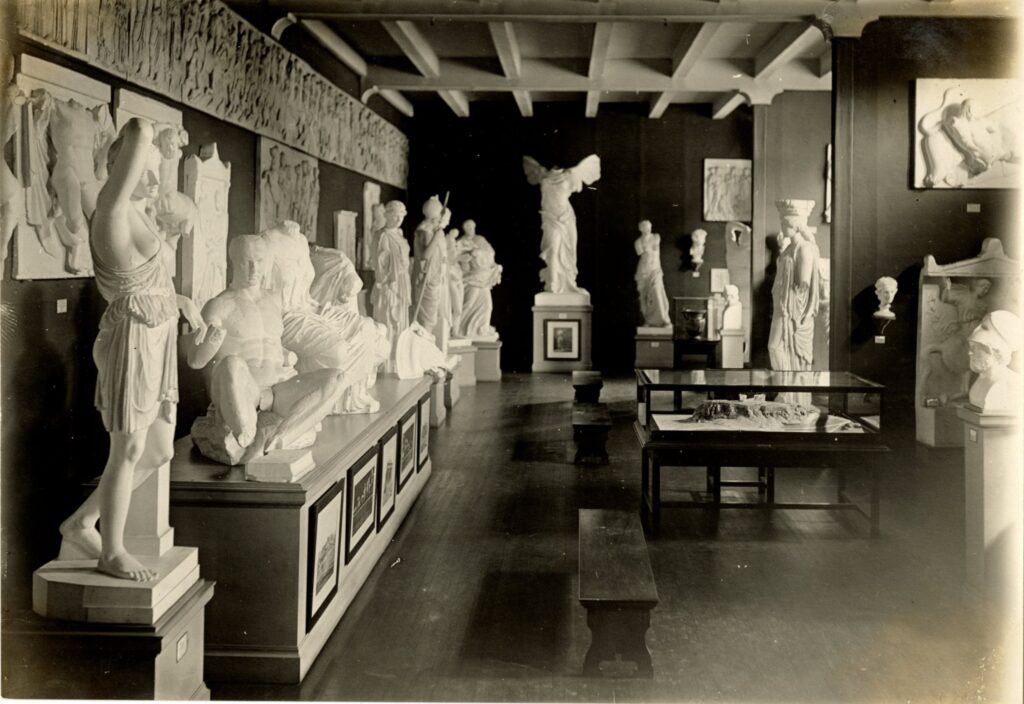
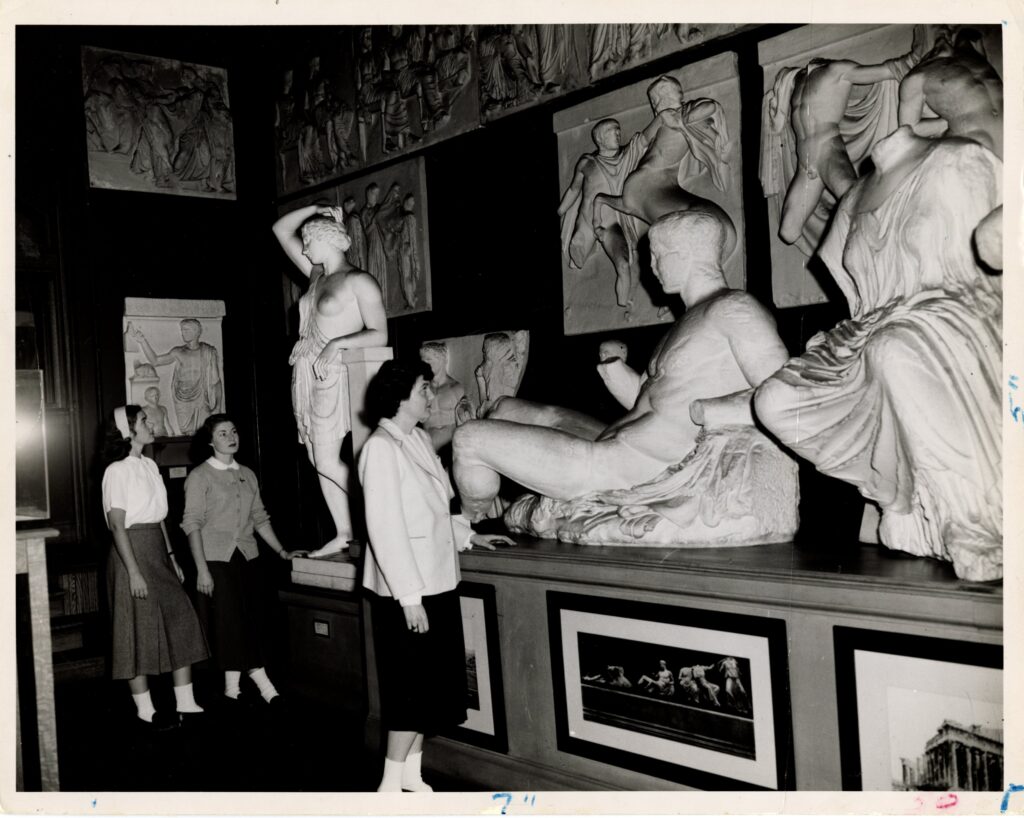
In 1917, the first floor sculpture gallery was renamed the Louise Fitz-Randolph Gallery of Casts. In order to ensure that the historical development of art was clearly illuminated, Fitz-Randolph organized the cast collection into groups to display “artistic power” at various stages of development.
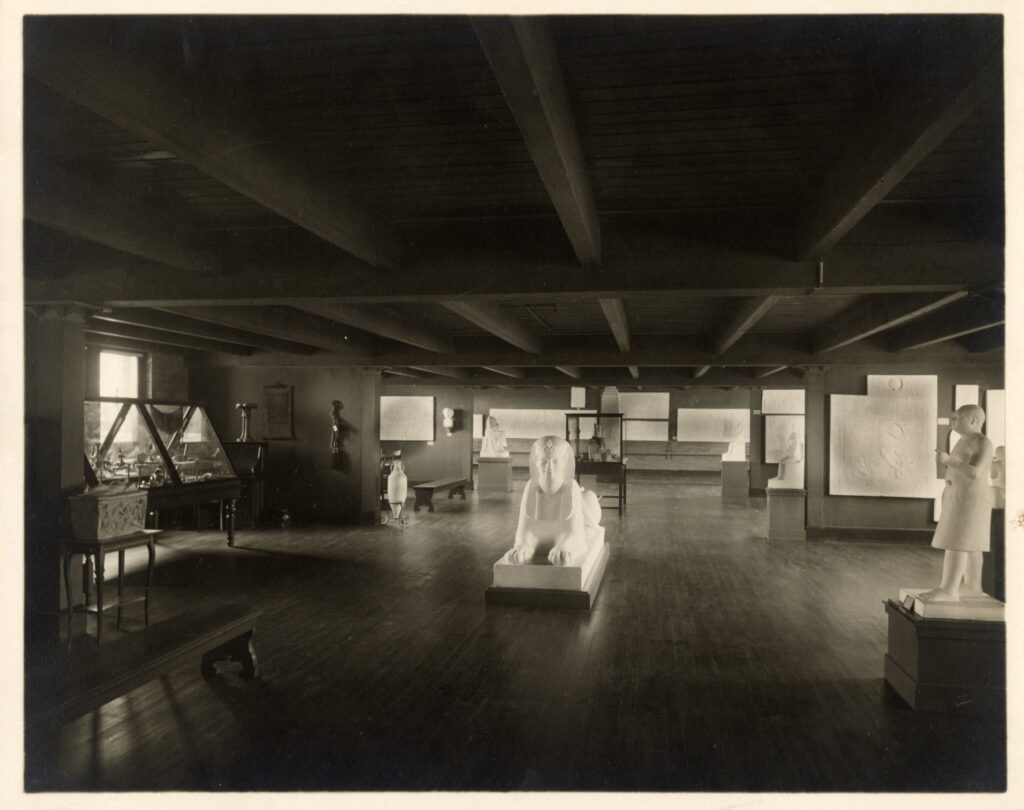
In 1906, the Louise Fitz-Randolph Gallery of Egyptian Casts was added for the purpose of showing Egyptian and Assyrian art, largely obtained through funds courtesy of the Egyptian Exploration Fund.
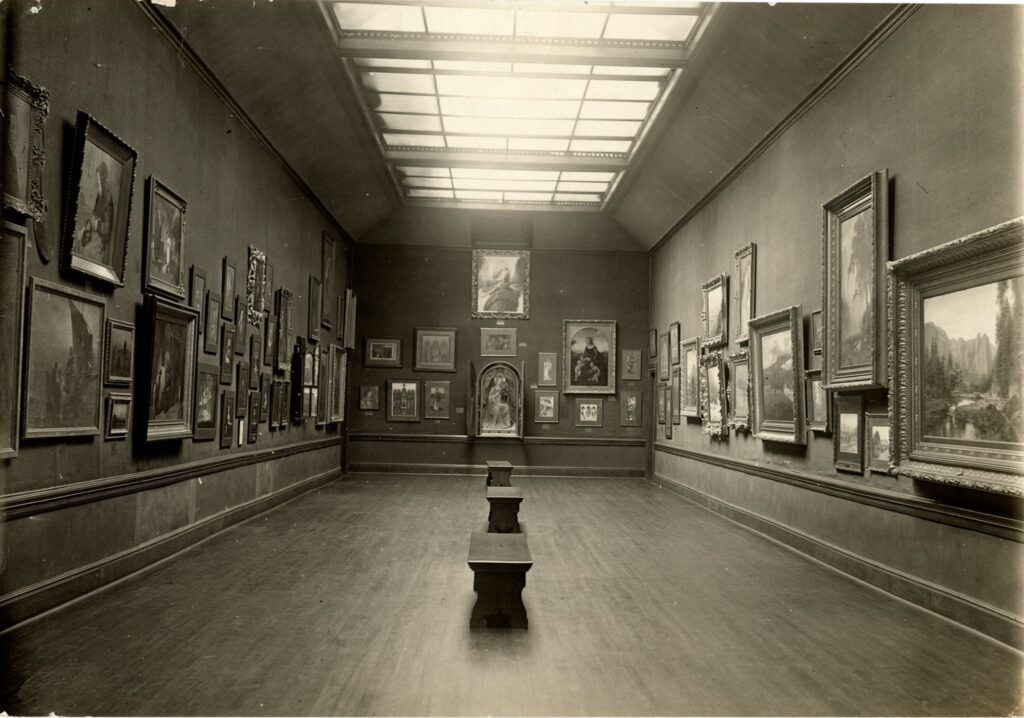
Located on the top floor of Dwight, the Louise Rodgers Jewett Gallery of Paintings was named in 1917 in honor of Jewett’s contributions to the department and its collections. In 1902-1903, she donated several of her paintings and drawings to the art museum’s collections though they were later deaccessioned. Jewett helped to establish a history of art major in 1904 and the next year, the first history of art student, a member of the class of 1905, graduated.
Due to the work and connections of both Jewett and Fitz-Randolph, Mount Holyoke became quite involved in various archaeological and art historical associations starting in 1902. These included the establishment of the Archaeological Club at the College, as well as the College’s subscriptions to both the American School of Classical Studies in Athens and the London-based Egyptian Exploration Fund.
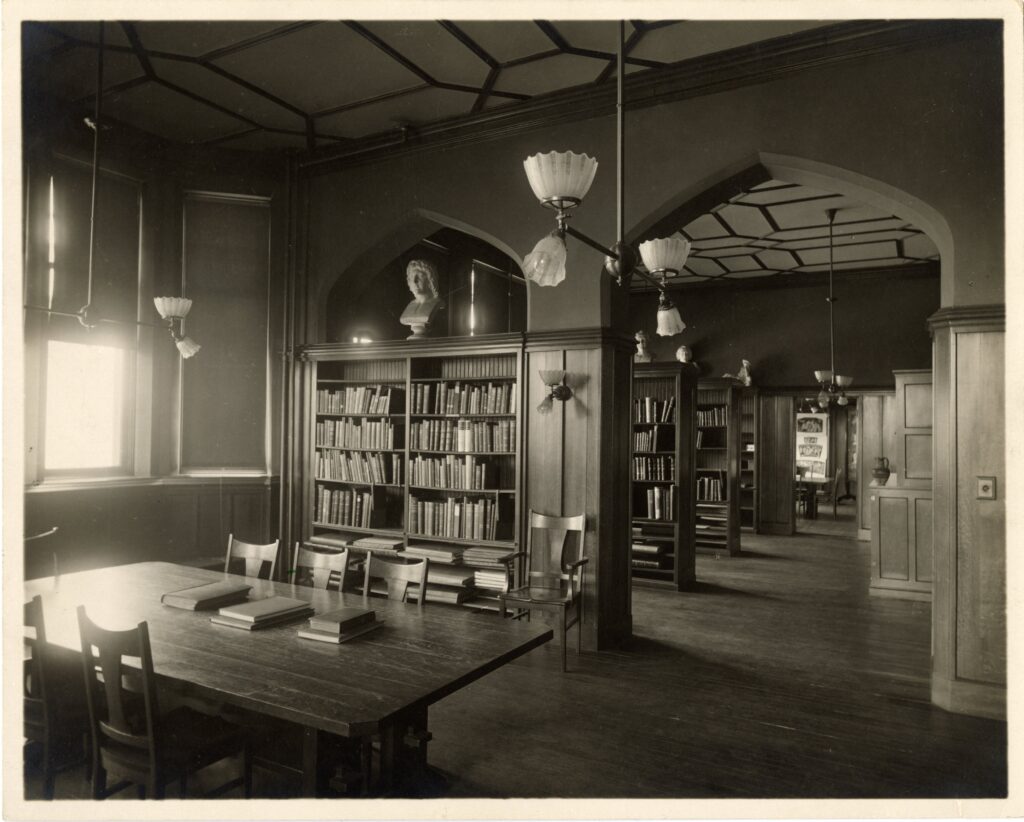
“Dwight Hall has proved admirably adapted to its purpose of art study and exhibition. Books and illustrative material are brought side by side and the advantage is increasingly afforded of using casts and photographs with journals, reference books and all standard authorities read at hand.”
– Llamarada 1911