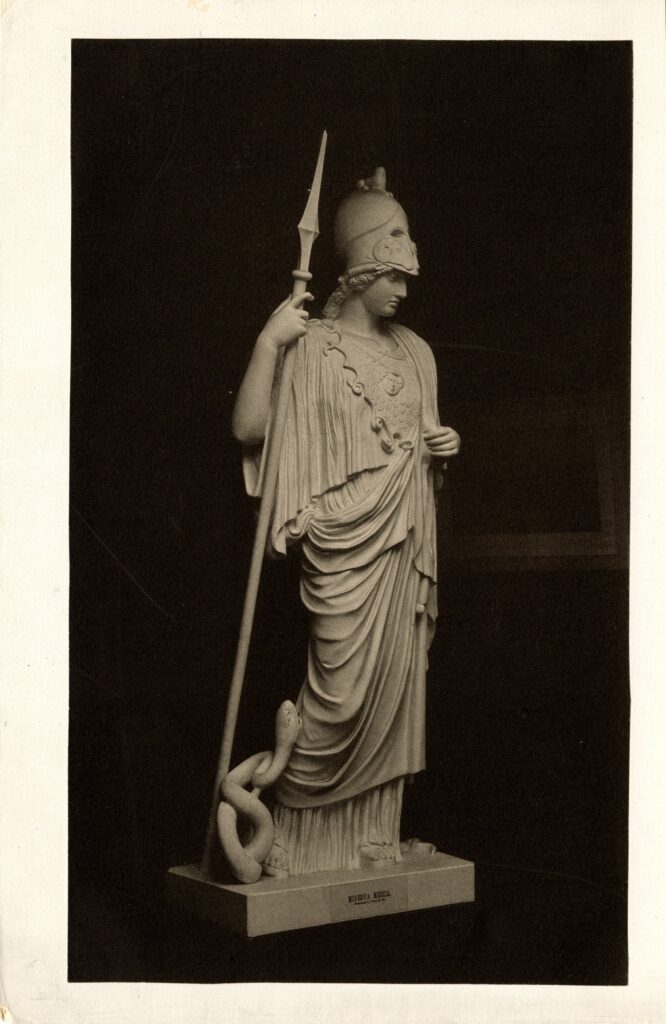
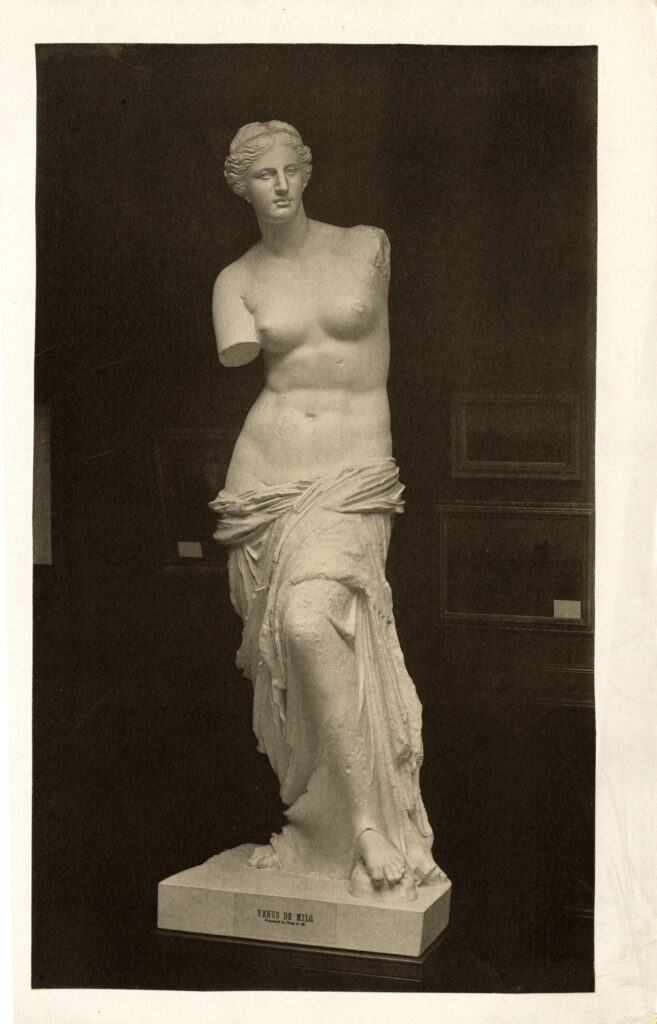
In addition to original works, the Williston art gallery also held plaster casts of ancient Greek and Roman sculpture and copies of Italian Renaissance works. Reproductions of “old masters” were vital for the study of art history. Photos and drawings of artworks had to be mounted on easels or screens in art classrooms for students to see. Later, lantern slides were used to project images. In reference to studying images of Greek and Roman statues in her art lectures, Mary P. Anderson, class of 1889, wrote “Some of the illustrations on sclulpure [sic] strike me as not being very modest but the Prof. seems to consider them very proper so I suppose it must be my bad taste.”
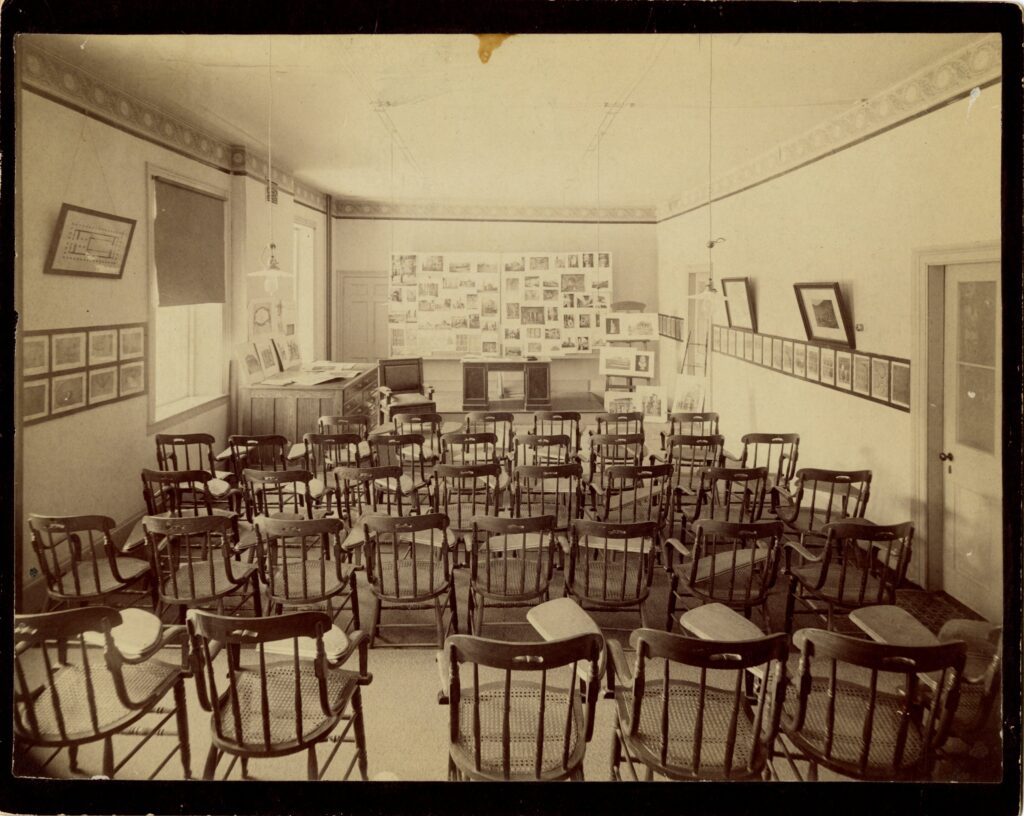
Mount Holyoke was the second college in the United States to have an art history department. The first was Harvard University whose fine arts department was created in 1875. For the 1876-1877 academic year, history of art was listed as a regular course of study for seniors. Course listings and syllabi from the 1890s show that history of art courses at Mount Holyoke, like many other colleges and universities in the United States at the time, focused primarily on Western European art and art of the Mediterranean.
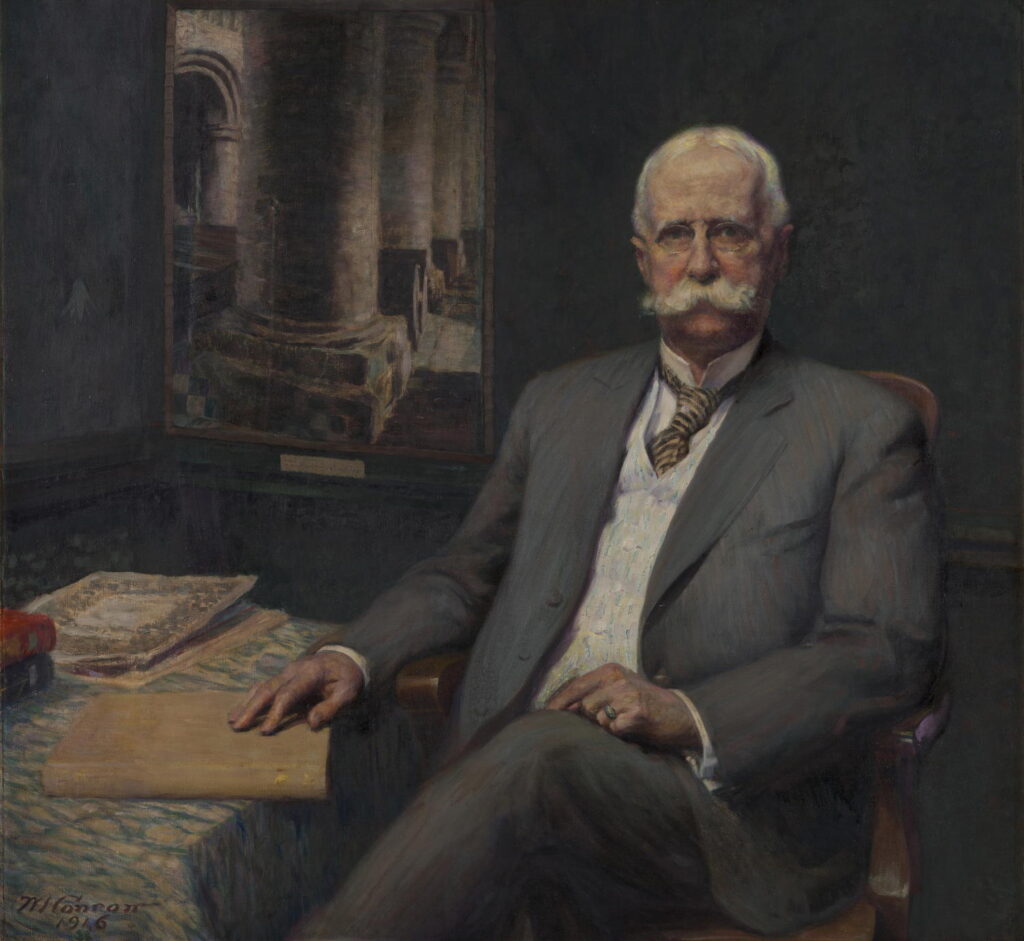
As the son of the famous inventor Charles Goodyear, William Henry Goodyear received an extensive art history education at Yale University and was the first teacher at Mount Holyoke Female Seminary to have a degree in art history. Goodyear worked as a guest lecturer of history and philosophy of art at Mount Holyoke from 1879-1891. He was also a lecturer at other institutions including the Copper Union in New York in the 1870s. He assigned Wilhelm Lübke’s History of Art which included many engravings of the art he discussed. Although the department’s resources were limited and many students couldn’t afford the expensive textbook, there were copies of the engravings made available during classes. Goodyear left Copper Union and the Seminary when he became the first curator of the Metropolitan Museum of Art in 1881. In 1899, he became the first curator of fine arts at the Brooklyn Museum in New York City.
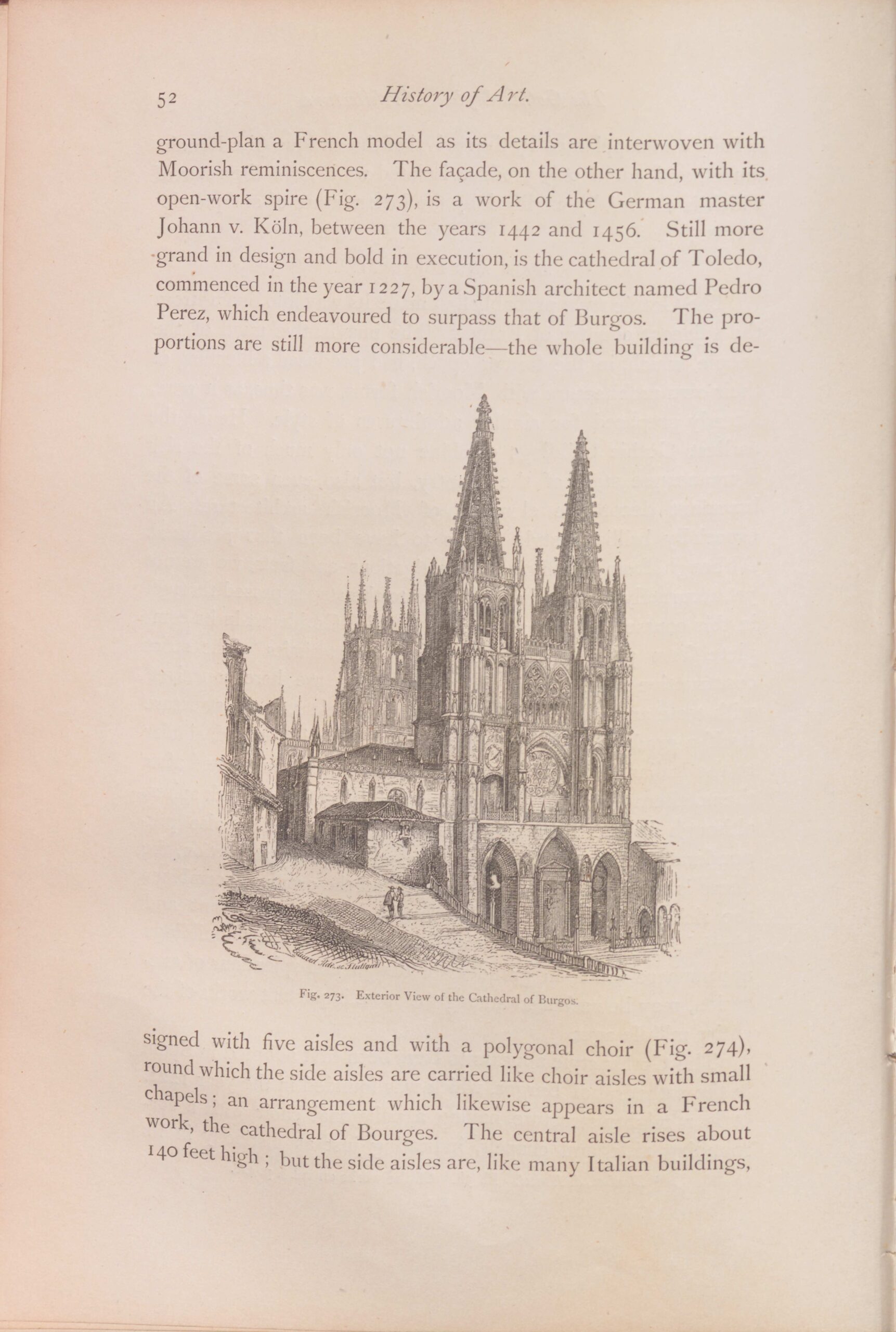
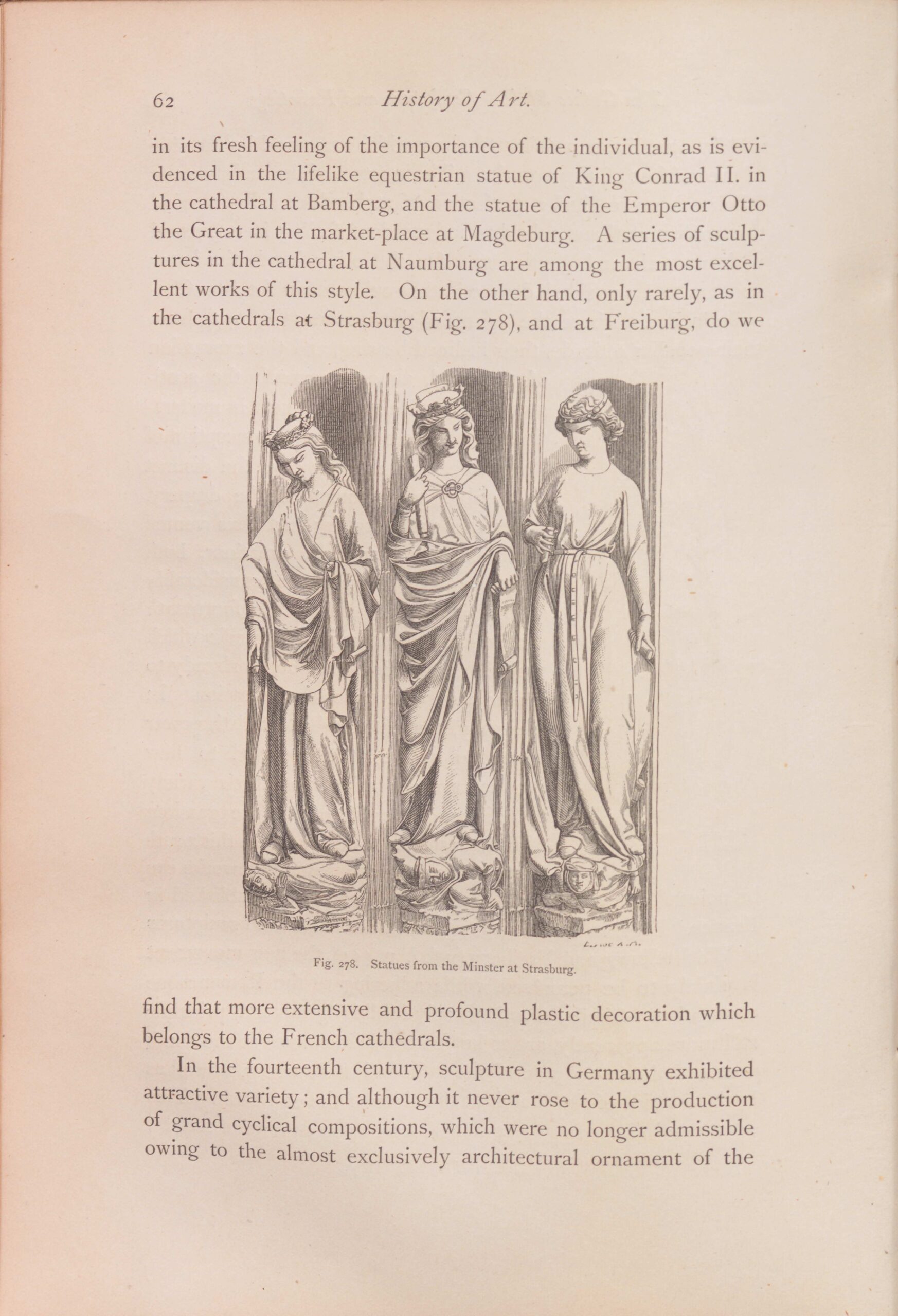
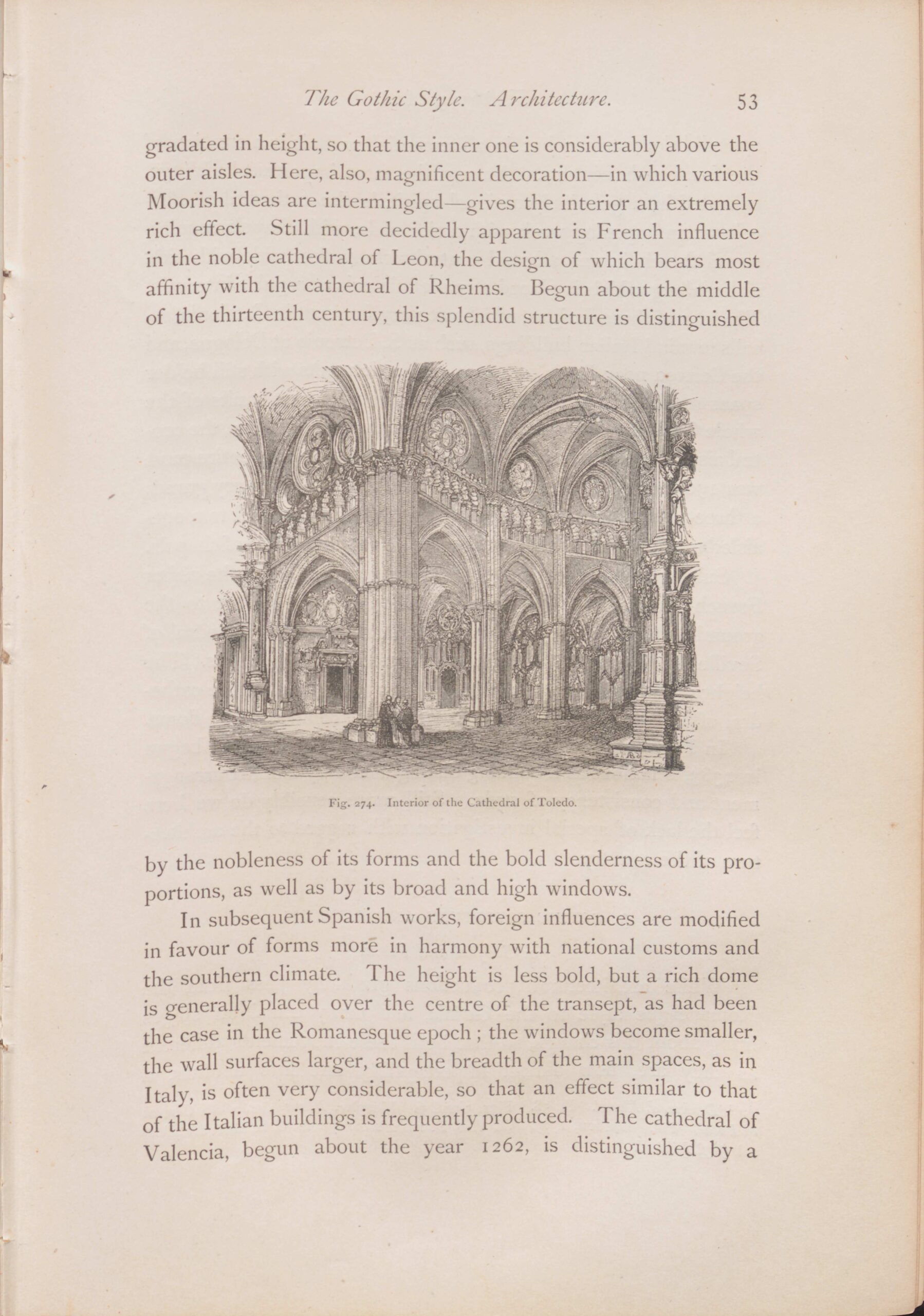
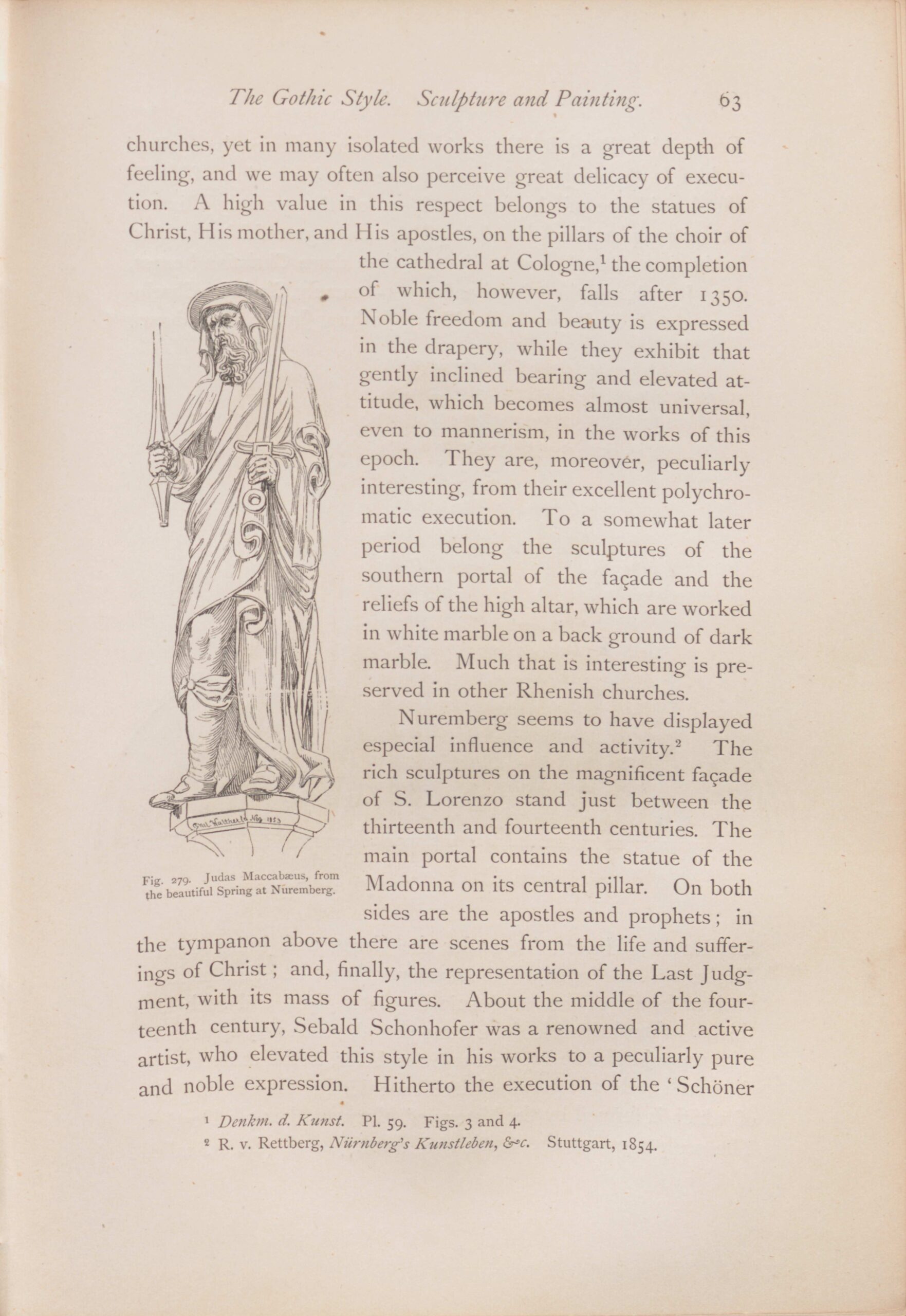
Above are pages from History of Art by Wilhelm Lübke, volume 2, second edition, 1869.
The textbook, History of Art, written by German art historian Wilhelm Lübke served as the basis for Mount Holyoke’s first art history curriculum.
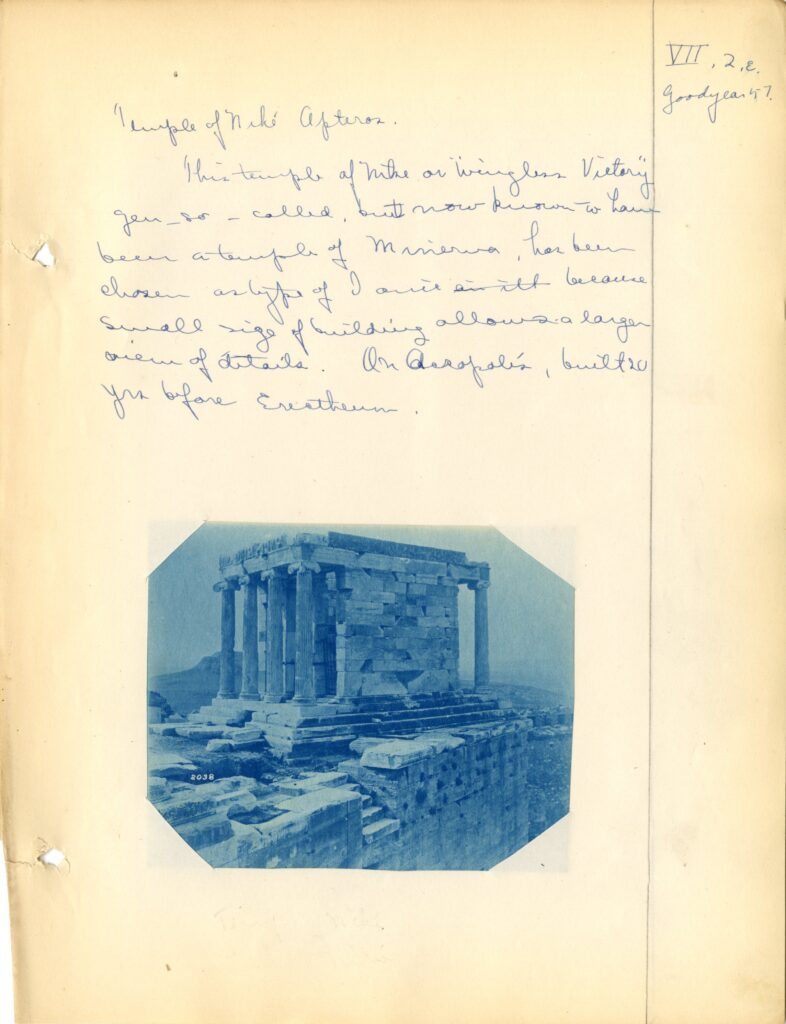
Mary Woodman, class of 1899, took a history of art course during her last year at Mount Holyoke. The class documented in this notebook was focused on ancient Egypt, Greece, and Rome.
As time went on, the department of art and archaeology began to outgrow its space in Williston Hall. Louise Fitz-Randolph, a member of the class of 1872 and head of the art department, complained that classrooms were frequently occupied by classes in the science and English departments and she often taught her courses in the Seminary building rather than in Williston Hall. After a fire destroyed the Seminary building in 1896, the need for a new art space became even more pressing. In 1897, Fitz-Randolph began appealing for a new art building.
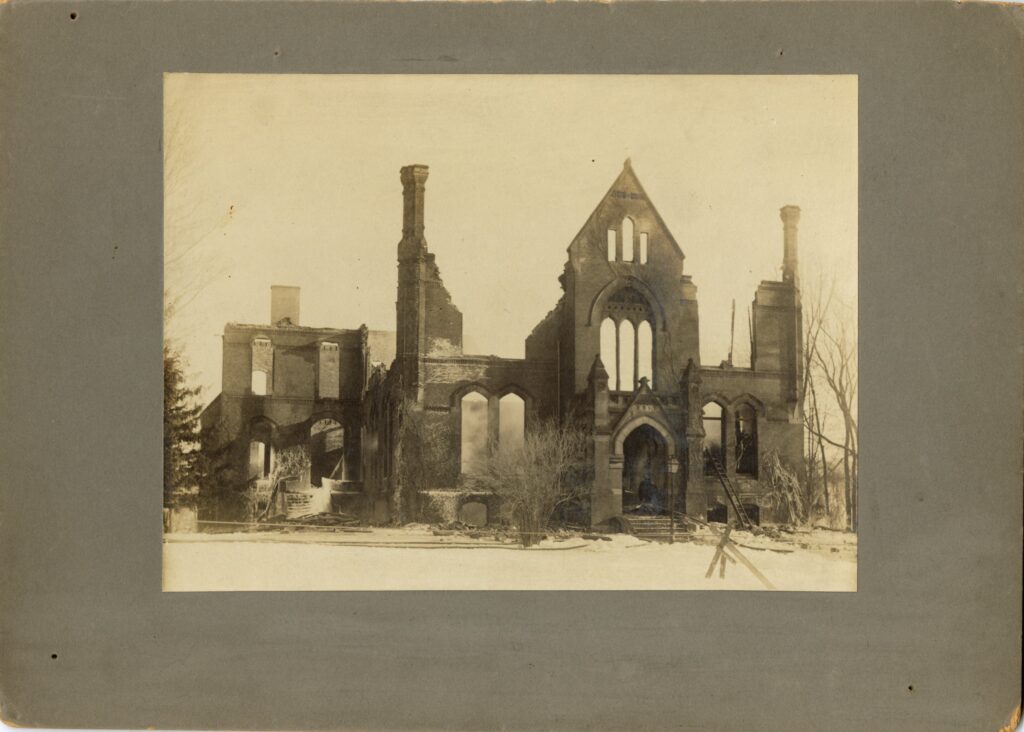
It was fortunate that the art department moved from Williston in 1901, because on December 22, 1917, Williston Hall burned down. The upper floors were completely destroyed in the fire and the science departments lost the majority of their collections, setting them back years in their research. If the art gallery had remained in Williston Hall, it is certain that many of the artworks in the Mount Holyoke College Art Museum today would have been lost.