The Mount Holyoke News becomes Choragos
In March 1968, editor-in-chief at the time, Julie Van Camp, class of 1969, announced that The Mount Holyoke News would be renamed Choragos. The word “choragos” refers to the leader of a Greek chorus, reflecting Van Camp’s vision of the newspaper being an active force for change on campus rather than “passive observers.” Van Camp’s editorial, “and now the phoenix,” evokes the image of the new newspaper rising from the ashes of MHN. Not everyone supported the newspaper’s transformation. Many members of the editorial board resigned, but Van Camp was able to recruit enough new staff to keep Choragos running. The paper was reimagined in a newsmagazine format, featuring more photographs and themed issues. In an article written for the United States Student Press Association, Van Camp explained that “startling changes in appearance will attract your reader’s eye and suggest to him that the content just may have changed as well.”
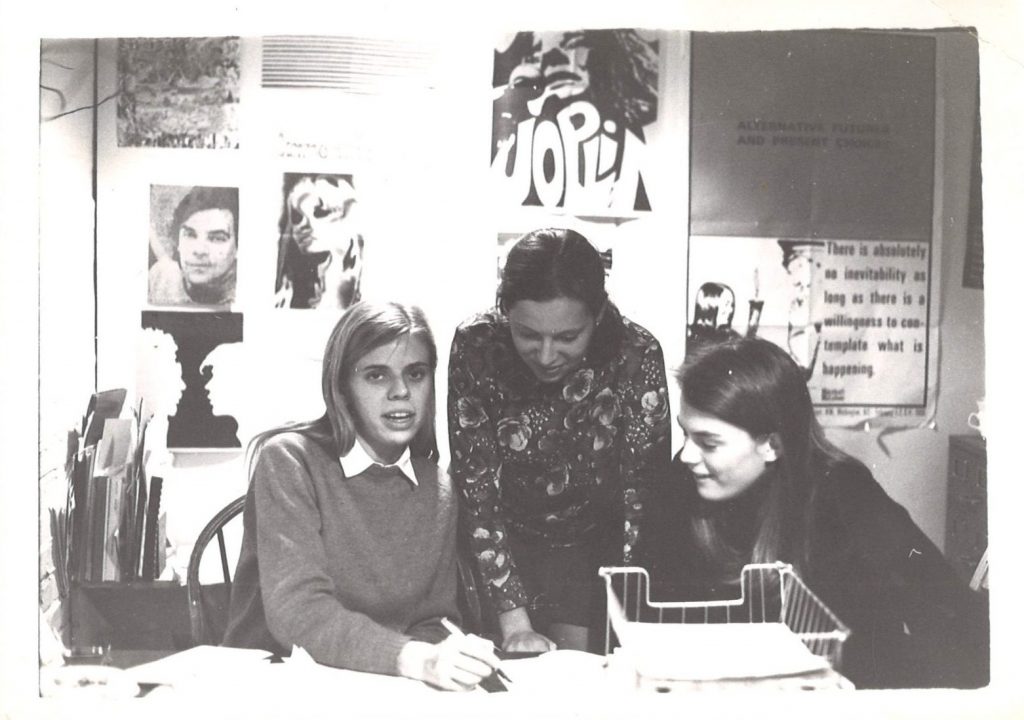
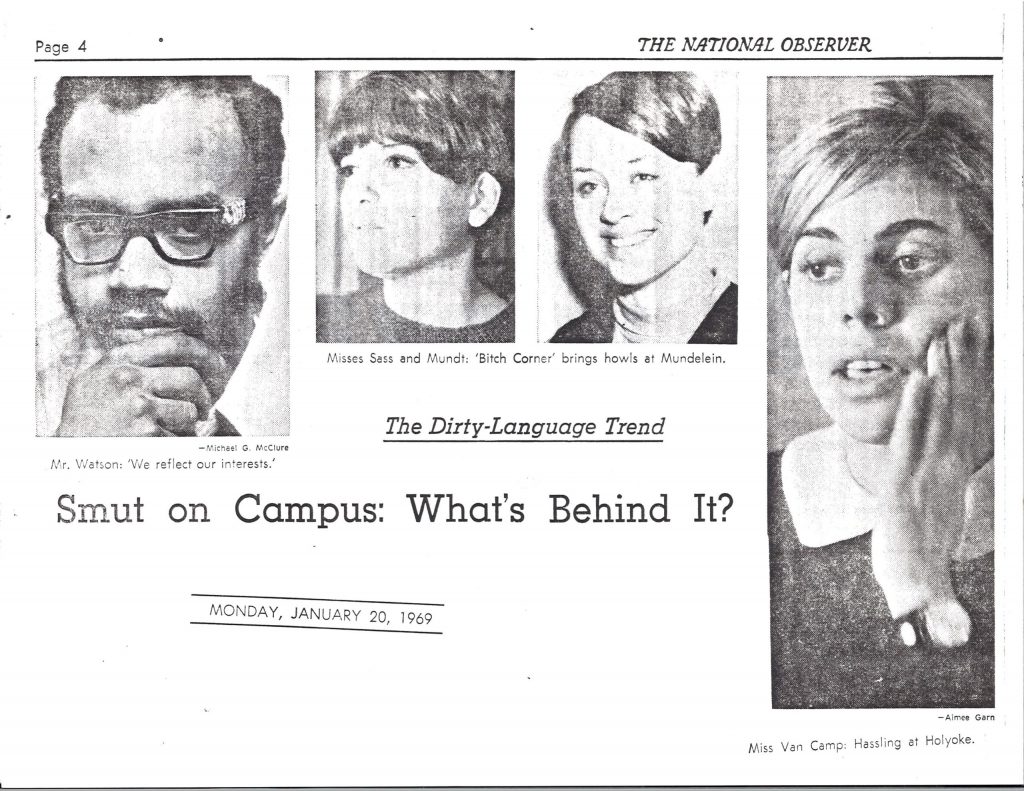
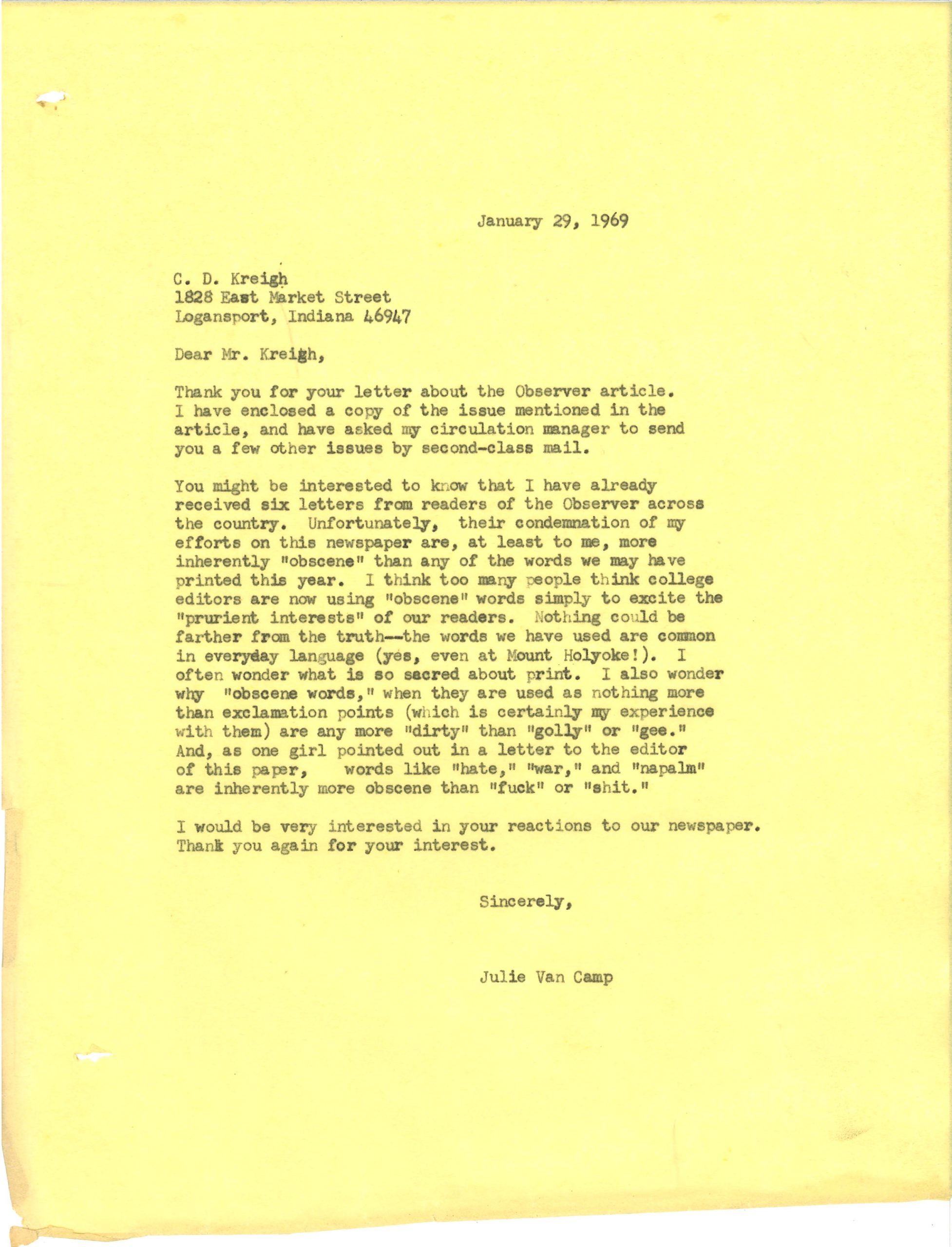
In addition to articles written by students, Choragos regularly featured pieces written by students and faculty from other colleges and universities around the country. One such guest editorial, written by Gerald Farber, a professor at the University of California, Los Angeles, caused controversy for its liberal use of explicit language. The issue gained so much attention that Choragos and Van Camp were featured in an article from The National Observer entitled “Smut on Campus.” Despite the numerous letters to the editors expressing their abhorrence of the editorial, the Choragos staff defended their right to publish such articles.
Van Camp earned an honorable mention in the 1969 Minnie Ryan Dwight Prize for excellence in journalism, winning a special prize of $10. That same year, Barbara Smith, class of 1969, managing editor of Choragos, and later author, activist, and independent scholar, also submitted her work to the judges for the prize. The first place prize ended up going to Sheryl McCarthy, class of 1969, a feature editor for Choragos.